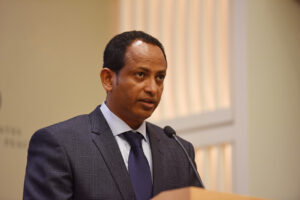
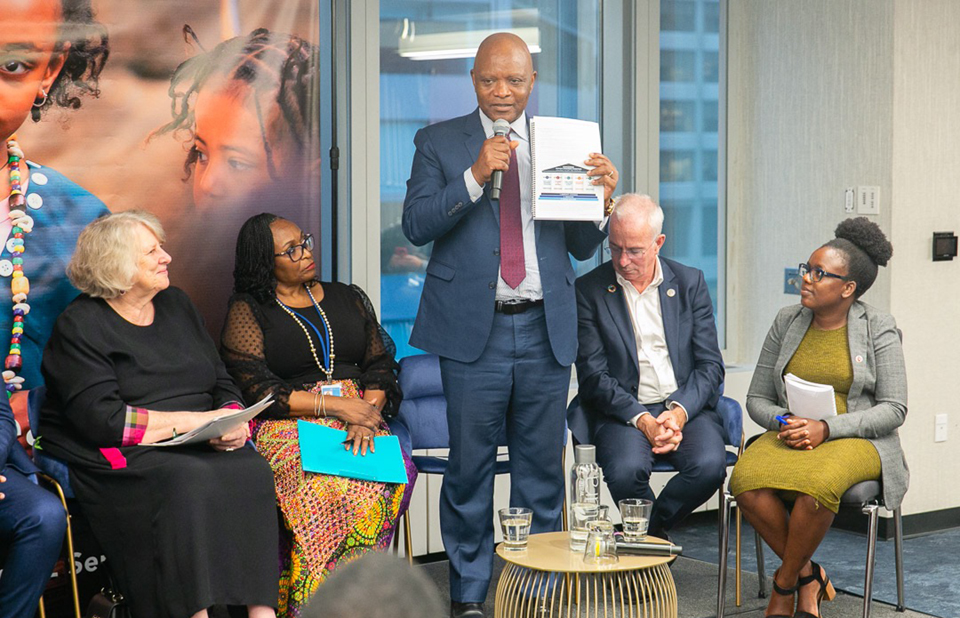
[caption id="attachment_103072" align="alignnone" width="960"] Ambassador Dr. John Nkengasong, United States Global AIDS Coordinator and Special Representative for Health Diplomacy[/caption] The United States Government is proud to work in partnership with governments and institutions in Africa, including the African Union (AU) and Africa Centres for Disease Control and Prevention (Africa CDC), to advance shared public health goals. As we continue to work to end the acute phase of the COVID-19 pandemic, we remain committed to strengthening health systems and institutions; advancing global health security; combatting HIV/AIDS, malaria, and tuberculosis; advancing sexual and reproductive health and rights, and maternal, neonatal, and child health; closing gaps in nutrition and non-communicable diseases; and accelerating efforts to achieve universal health coverage and the 2030 Agenda for Sustainable Development. Advancing health equity, including gender equity and equality, are priorities for the Biden-Harris Administration, and are integrated throughout our global health programs, including through direct provision of health services to women, girls, and LGBTQI+ populations.
Since the beginning of the Biden-Harris Administration, the United States has invested and committed to provide nearly $20 billionin health programs in the Africa region. This includes nearly $11.5 billion to address HIV/AIDS; more than $2 billion to combat malaria; more than $2 billion in support of family planning and reproductive health as well as maternal and child health; and more than $2 billion to address the health, humanitarian, and economic impacts of COVID-19. These bilateral programs complement significant U.S. investments in multilateral organizations that provide substantial support to improving health outcomes in Africa, such as the World Health Organization; Gavi, the Vaccine Alliance; the Global Fund to Fight HIV/AIDS, TB, and Malaria; the United Nations Population Fund, and the Joint United Nations Program on HIV/AIDS, among others.
U.S. investments and partnerships on health in Africa have saved millions of lives, strengthened health systems, and made Africa and the world better prepared for current and future health security threats. Thanks to sustained partnership and investment, maternal and child mortality and malaria mortality across the continent have declined dramatically. U.S. investments in Fiscal Year 2021 alone enabled the provision of family planning and reproductive health services to 15.4 million African women, averting 4.7 million unintended pregnancies and preventing 10,780 maternal deaths. In the last twenty years, PEPFAR has saved more than 25 million lives, prevented millions of HIV infections, and helped countries build a strong foundation to prevent, detect, and respond to other health threats.
U.S. intensive health security investments and partnership across fourteen countries on the continent have yielded progress in biosafety and biosecurity capacity, zoonotic disease capacity, surveillance systems, national laboratory systems, emergency preparedness, and emergency response operations. In 2021 alone, the United States and African nations tackled multiple outbreaks on the continent together, including COVID-19 and Ebola, effectively using the critical global health security improvements that these partnerships have advanced.
Investing in the health workforce to build more resilient health systems
In May 2022, the White House launched the Global Health Worker Initiative (GHWI), recognizing that a health workforce that is supported, equipped and protected to provide essential public health functions is integral to reclaiming lost ground from the COVID-19 pandemic and preparing for future health threats. In order to achieve the Sustainable Development Goals by 2030, Africa will need 5.3 million additional health workers, the majority of whom will be women. Recognizing this gap, African institutions have established health workforce goals for the continent that reflect the whole spectrum of health, including preventive services, health care services, and pandemic preparedness and response.
As part of the GHWI, the Administration plans to work with Congress to invest$1.33 billionannually from 2022 to 2024 in health workforce in the Africa region, for a total of at least $4 billion by Fiscal Year 2025, to help our African partners close the gap in health workers, including clinicians, community health and care workers, and public health professionals. U.S. federal agencies will work together with regional partners to align and maximize investments with country needs, and will report on standardized metrics that capture our whole of government investments in health workforce in Africa.
Initiatives in support of this regional health workforce commitment include:
USAID recently launched its Accelerating Primary Health Care Collaborative (APHC-C), which aims to work with partner countries in Africa to accelerate primary health care to reclaim lost ground on global health and to foster resilience and preparedness against future threats. These efforts will focus on an initial set of five partner countries, Côte d'Ivoire, Ghana, Kenya, Malawi, and Nigeria, harnessing the USAID and PMI health footprint, supported by an average of over $415 million annually in USAID funds in 2022 and 2023.
Strengthening HIV/AIDS Health Worker Leadership in Global Health through PEPFAR. To advance Africa's commitment to increase and retain health care workers, PEPFAR is committed to investing approximately $1.1 billion annually to support the more than 325,000 health workers in the region who enable the delivery of HIV/AIDS programs. The support for this health workforce will not only protect and scale HIV gains, but can also be leveraged to fight outbreaks and other disease threats.
The U.S. President's Malaria Initiative (PMI) is working across the health system in 24 countries in Africa to deepen our support for the health workforce, including by enacting a policy change in 2021 to catalyze long-term investment in community health workers with access to the hardest-to-reach areas affected by malaria. Under this new policy, partner countries throughout Africa are paying community health workers with PMI funds.
The Centers for Disease Control and Prevention (CDC) is continuing to invest in health workforce programs throughout the region, including through:
Support for Africa CDC through the National Public Health Institute (NPHI) Program, which offers ongoing trainings and directs technical assistance that strengthen the capacity of Africa CDC staff in surveillance methodologies and disease prevention and control. Since the beginning of the Administration, with current and planned investments of at least $9.7 million, CDC is supporting Africa CDC to build out an online platform for supporting Africa CDC’s goals of building workforce capacity within African Union Member States.
The Field Epidemiology Training Program (FETP), with $47 million in invested and planned CDC funding since Fiscal Year 2021, strengthens countries’ capacity to prevent, detect, and respond to public health threats. FETP graduates were mobilized during recent outbreaks of Rift Valley Fever and Crimean-Congo hemorrhagic fever in Mauritania, Sudan Ebolavirus in Uganda, and the 2021 Ebola outbreak in Guinea, as well as the COVID-19 response in multiple countries.
The Global Laboratory Leadership Program (GLLP), with $5.2 million in invested and planned CDC support since Fiscal Year 2021, mentors current and emerging laboratory leaders to build, strengthen, and sustain national laboratory systems with a One Health focus.
Partnering to build stronger health systems and strengthen global health security
The United States continues to strengthen global, regional, and national capacities to prevent, detect, and respond to infectious disease threats. As part of the U.S. commitment to expand global health security partnerships, the United States announced it has invested and committed to provide $782 million inglobal health security programs in Africa since the beginning of the Administration through USAID and CDC, alongside other federal agencies, to work with partner countries to address capacity gaps and support their National Action Plans for Health Security. In addition to its current intensive partnership with fourteen countries across the continent, the United States welcomes the addition of Ghana, Mozambique, and Zambia as new partners in this effort.The United States further announced $215 million – new funding to address the COVID-19 pandemic in Africa, which will focus on accelerating widespread and equitable access to and delivery of safe and effective COVID-19 vaccinations; reducing morbidity and mortality from COVID-19; mitigating transmission; and strengthening health systems. Additional actions to advance pandemic preparedness and response include:
Partnership to accelerate regional manufacturing. PEPFAR and PMI continue to leverage their platforms in the region to accelerate regional manufacturing capacity:
PEPFAR currently spends roughly $750 million in the purchase of HIV-related commodities every year, but less than 1 percent of that total is used to procure commodities from African manufacturers. PEPFAR is actively exploring opportunities to shift its procurement practices to spur growth in the regional manufacturing ecosystem. Building on existing capabilities and an analysis of future expansion potential: for HIV rapid diagnostics, by 2025, PEPFAR aims to procure 15 million tests produced by African manufacturers at an estimated cost of $20 million. For ARVs, by 2030, PEPFAR aims to work alongside other partners and buyers to shift at least two million patients on first-line ARV treatments to use African-made products. DFC also seeks to finance eligible private sector projects that build regional manufacturing capacity for therapeutics, diagnostics, and ancillary supplies in developing countries, with a focus on Africa.
PMI is committed to building a more resilient supply chain and is leveraging its procurement volume to accelerate the growth in regional manufacturing. The inclusion of evaluation criteria in recent tenders related to manufacturing on the continent led to an estimated 30 percent of PMI's 2023 standard mosquito net procurement being sourced from African-based manufacturers.
Senegal Institut Pasteur de Dakar (IPD) Flexible Vaccine Manufacturing Facility. The U.S. International Development Finance Corporation (DFC), along with International Finance Corporation (IFC) and other like-minded development finance institutions, is continuing to support IPD in Senegal to become a key hub in the African Union’s vaccine production network. DFC previously provided a $3.3 million technical assistance grant for early-stage project development and is evaluating additional financing for expansion of the industrial-scale facility.
Harnessing Data Science for Health Discovery and Innovation in Africa (DS-I Africa) was established in 2021, and since the beginning of the Administration NIH has invested $49 million since the beginning of the Administration to leverage data science technologies to develop solutions to the continent’s most pressing public health problems. NIH is expanding DS-I Africa through new educational activities that enhance workforce training to meet the biomedical, behavioral and clinical needs.
The STOP Program (STOP), which has been active in nearly every African country over the life of the program, is a collaboration between CDC, WHO, and UNICEF to strengthen national immunization surveillance programs, support supplemental immunization activities, respond to disease outbreaks, and help support polio eradication. Since the beginning of the Administration, CDC has committed and aims to invest at least $32.1 million.
Investing in Health Infrastructure
G7 leaders launched the Partnership for Global Infrastructure and Investment (PGII) in June 2022, with a goal of mobilizing hundreds of billions of dollars and delivering quality, sustainable infrastructure, including developing and upgrading the infrastructure of health systems and contributing to global health security. In support of PGII, and as part of DFC’s Global Health and Prosperity Initiative, DFC has committed more than $253 million to projects focused on improving pandemic preparedness and health system resilience in Africa since January 2021. These include investments in health services and infrastructure, health commodity manufacturing and supply chain, and digital health as well as water, sanitation, and nutrition. In addition to investments in the health workforce and vaccine manufacturing, programs in support of PGII include:
DFC and USAID announced their collaboration with the Transform Health Fund, an innovative blended-finance fund focused on locally-led health supply chain, care delivery, and digital solutions in Africa. DFC and USAID will finalize $10 million in equity financing and $1 million in catalytic grant funding, respectively. With these investments, the Fund announced approved commitments of $50 million. The majority women-led fund is a collaborative effort bringing together government, donor, and commercial investments under the leadership of AfricInvest and the Health Finance Coalition to finance enterprises that improve health system resilience and pandemic preparedness across the continent. The Fund will also promote women in leadership positions across its pipeline and target female consumers while ensuring that at least 30% of its portfolio is aligned with 2X criteria, DFCs flagship program to support women’s economic empowerment in emerging markets.
Power Africa announced the Healthcare Electrification and Telecommunication Alliance (HETA), with $10 million in funding, a $150 million partnership program to power up and digitally connect thousands of health facilities in sub-Saharan Africa, transforming them into hubs of clean energy development.
DFC committed a $10 million equity investment equivalent to the Water Access Acceleration Fund (W2AF). W2AF is a €50 million blended finance fund, accompanied by a €2.5 million technical assistance facility. The fund will invest in approximately 10 small and medium-sized enterprises in the water, sanitation, and hygiene sector to scale access to potable and affordable water in sub-Saharan Africa and other emerging markets. W2AF also has strong support from USAID with their commitment of $1.1 million for technical assistance and first loss.
USTDA has announced a series of health system investments in Nigeria totaling $3 million, including a feasibility study for the Nigerian private healthcare network Lily Hospitals Limited to support the acquisition, refurbishment, and operation of ten healthcare facilities in Nigeria; a feasibility study for the expansion of healthcare and related-sector logistics using unmanned aerial vehicles; and a feasibility study for Cedarcrest Hospitals Limited, a Nigerian private health operator, to support the development of a comprehensive cancer treatment center in Abuja, Nigeria.
Partnering on Cancer Prevention, Detection, Treatment and Research
The United States is committed to working together with African governments to reduce the rising burden of cancer, as we collectively work towards the President’s vision of ending cancer as we know it. With this shared responsibility, U.S. agencies drive and support impactful initiatives with African partners, including the design and implementation of pragmatic technological interventions, support for research centers, providing access to cancer prevention, early detection and treatment, clinical trial development and strengthening institutional capacity for global cancer research in Africa with a goal to diversify the global cancer research workforce. Africa is a critical partner as we work together to develop new and innovative solutions to prevent, detect and treat cancer. Efforts to strengthen health systems and public health infrastructure, as well as investments by the private sector, will also help end cancer as we know it. *White House

 Ambassador Dr. John Nkengasong, United States Global AIDS Coordinator and Special Representative for Health Diplomacy[/caption] The United States Government is proud to work in partnership with governments and institutions in Africa, including the African Union (AU) and Africa Centres for Disease Control and Prevention (Africa CDC), to advance shared public health goals. As we continue to work to end the acute phase of the COVID-19 pandemic, we remain committed to strengthening health systems and institutions; advancing global health security; combatting HIV/AIDS, malaria, and tuberculosis; advancing sexual and reproductive health and rights, and maternal, neonatal, and child health; closing gaps in nutrition and non-communicable diseases; and accelerating efforts to achieve universal health coverage and the 2030 Agenda for Sustainable Development. Advancing health equity, including gender equity and equality, are priorities for the Biden-Harris Administration, and are integrated throughout our global health programs, including through direct provision of health services to women, girls, and LGBTQI+ populations.