PAN AFRICAN VISIONSPAN AFRICAN VISIONSPAN AFRICAN VISIONS
Font ResizerAa
  • Home
  • Politics
    PoliticsShow More
    Cameroon: ‘Enough Is Enough’ After 10 Years of Conflict – Agbor Balla

    By Boris Esono Nwenfor BUEA, PAV – Cameroon must do more to…

    By
    Pan African Visions
    Cameroon’s Anglophone Crisis Marks 10 Years as Rights Groups Release Partial List of 4,000 Reported Deaths

    By Boris Esono Nwenfor BUEA, Cameroon — Ten years after protests in…

    By
    Pan African Visions
    Counting the Dead in Cameroon

    By Felix Agbor Balla Nkongho and Rebecca Tinsley * Ten years ago,…

    By
    Pan African Visions
    Amnesty Researcher Accuses Sudan Rebels Of  Recruiting Children,  Sexual Violence

    By Jean-Pierre A.  The Rapid Support Forces (RSF), have recruited children in…

    By
    Pan African Visions
    Mutharika Marks First Year in Office, Calls on Malawians to Unite and Rebuild Economy

    By Burnett Munthali LILONGWE — President Arthur Peter Mutharika has marked his…

    By
    Pan African Visions
  • Business
    BusinessShow More
    Totalenergies And Africa: Mike Sangster On The Investments, Partnerships And Projects Shaping A New Energy Era

    From Mozambique and Namibia to Uganda, Angola and Nigeria, TotalEnergies is placing…

    By
    Pan African Visions
    Sierra Leone : Inside Africa’s Emerging Energy Investment Frontier

    From Shell’s offshore reconnaissance agreement and Eni’s entry to Marginal Energy’s $225…

    By
    Pan African Visions
    Senegal Is Ready For Its Next Investment Cycle

    -Energy Minister Abdourahmane Diouf on new projects, reforms and opportunities. From Sangomar…

    By
    Pan African Visions
    TotalEnergies Bets on East Africa’s Youth to Power the Next Energy Era

    From Kampala to Arusha, TotalEnergies is expanding its engagement with students, young…

    By
    Pan African Visions
    Cesare Canevese On Dietsmann’s African Ambitions And Its Priorities At AEW 2026.

    By Ajong Mbapndah L* For decades, Dietsmann has been a familiar presence…

    By
    Pan African Visions
  • Health
  • Sport
    SportShow More
    NBA Closes Africa Academy After Eight Years of Developing Young Talent

    By Boris Esono Nwenfor The National Basketball Association (NBA) has closed its…

    By
    Pan African Visions
    Zanzibar’s Under-13 Footballers Head to Brazil Seeking Experience Beyond the Pitch

    By Adonis Byemelwa Zanzibar— Eighteen young footballers from Zanzibar are scheduled to…

    By
    Pan African Visions
    DR Congo Maintain Perfect Start as AFCON 2027 Qualifying Race Takes Shape

    By Boris Esono Nwenfor BUEA, PAV – The Democratic Republic of Congo…

    By
    Pan African Visions
    Cameroon Begin AFCON 2027 Qualifying Campaign with 3-1 Win Over Comoros

    By Boris Esono Nwenfor BUEA, PAV – Cameroon made a winning start…

    By
    Pan African Visions
    Ambassador Koroma Urges Leone Stars to Make Sierra Leone Proud Ahead of Zimbabwe Clash

    By Aminaash Nyande Brima El Jadida, Morocco, September 24, 2026 —* Sierra…

    By
    Pan African Visions
  • Multimedia
    • Sports
    • Documentaries
    • Comedy
    • Music
    • Interviews
  • APO/PAV
  • AMA/PAV
    AMA/PAVShow More
    Thales selected by Royal Air Maroc to digitalise flight operations with AvioBook Flight

    Thales is proud to support Royal Air Maroc’s ambitious growth strategy with…

    By
    Pan African Visions
    FIS-RDC, EnPower, Trafigura and Gridworks Join Forces to Deliver Landmark Power Interconnector to Supply the DRC’s Copperbelt

    A 700MW cross-border transmission line will bring affordable power to the DRC’s…

    By
    Pan African Visions
    SAP Puts the Autonomous Enterprise to Work

    Joule Work, Joule Assistants and SAP Business AI Platform help organizations turn…

    By
    Pan African Visions
    Africa’s best-kept secret, Lucky Hustle, takes Small Agency of the Year at the 14th Wesbank New Generation Awards for a second year

    JOHANNESBURG, South Africa, 30 September 2026 -/African Media Agency(AMA)/ – How much…

    By
    Pan African Visions
    Angola takes another step towards the accreditation of its laboratories

    Geneva, Switzerland, 29 September 2026- /African Media Agency (AMA)/ – The World…

    By
    Pan African Visions
  • Media OutReach
    Media OutReachShow More
    OPPO Find X10 Series to Launch Globally on October 21 with Next-Generation True-to-Life Imaging

    SHENZHEN, CHINA – Media OutReach Newswire – 8 October 2026 – OPPO…

    By
    Pan African Visions
    As Travel Surges and Disruptions Persist, Allianz Insurance Singapore Highlights Growing Need for Travel Protection

    SINGAPORE – Media OutReach Newswire – 8 October 2026 – Allianz Insurance…

    By
    Pan African Visions
    Media OutReach Newswire Founder & CEO Jennifer Kok Named Top Nominee in the Woman Entrepreneur Category for EY Entrepreneur Of The Year™ 2026 Malaysia

    Recognition in the Woman Entrepreneur category honours a 17-year journey building Asia…

    By
    Pan African Visions
    Win A Trip To Las Vegas As Audi Revolut F1 Team Reveals Singapore Special Livery And Exclusive Adidas Capsule Collection

    Special Audi R26 livery combines a Singapore-specific interpretation of Titanium Silver Grey,…

    By
    Pan African Visions
    Malaysia Secures 20 Recognitions, Including Eight Category Wins, At ASEAN Energy Awards 2026

    MANILA, PHILIPPINES – Media OutReach Newswire - 8 October 2026 – The…

    By
    Pan African Visions
  • Blogs
    • African Show Biz
    • Insights Africa
    • Cumaland Diary
    • Kamer Blues
    • Nigerian Round Up
    • Ugandan Titbits
    • African View Points
    • Global Africa
  • Magazines
Search
  • Global Africa
  • Interviews
  • Politics
  • Sports
  • African Newsmakers
  • African View Points
  • Development
  • Discoveries
  • Education
© 2026. Pan African Visions. All Rights Reserved.
Reading: State-Owned Companies Are Key to Climate Success in Developing Countries, but Are Often Overlooked in the International Dialogue
Font ResizerAa
PAN AFRICAN VISIONSPAN AFRICAN VISIONS
  • Politics
  • Business in Africa
  • Blog
  • Health
  • Sports
  • Entertainment
  • Multimedia
  • Contact
Search
  • Home
  • Politics
  • Business
  • Health
  • Sport
  • Multimedia
    • Sports
    • Documentaries
    • Comedy
    • Music
    • Interviews
  • APO/PAV
  • AMA/PAV
  • Media OutReach
  • Blogs
    • African Show Biz
    • Insights Africa
    • Cumaland Diary
    • Kamer Blues
    • Nigerian Round Up
    • Ugandan Titbits
    • African View Points
    • Global Africa
  • Magazines
Have an existing account? Sign In
Follow US
© 2025 Pan African Visions.  All Rights Reserved.
PAN AFRICAN VISIONS > Blog > AMA > State-Owned Companies Are Key to Climate Success in Developing Countries, but Are Often Overlooked in the International Dialogue
AMAUncategorized

State-Owned Companies Are Key to Climate Success in Developing Countries, but Are Often Overlooked in the International Dialogue

Last updated: September 16, 2020 6:30 pm
Pan African Visions
Share
SHARE

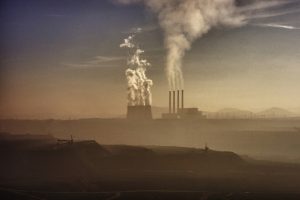
When it comes to climate, state-owned enterprises are and will remain major actors in energy and other sectors that are central to the low-carbon effort. Credit: IPS.

When it comes to climate, state-owned enterprises are and will remain major actors in energy and other sectors that are central to the low-carbon effort. Credit: IPS.

By Philippe Benoit
WASHINGTON, Sep 16 2020 (IPS)

Later this month, government officials and climate stakeholders will once again converge on New York City (this time virtually) for Climate Week and the United Nations meetings.  And while there will be much discussion about the important role that actors such as private businesses, civil society and cities will need to play in the climate change effort, there will once again be relatively little discussion about one key cohort: government-owned companies. 

Although these companies are not prominent in many of the OECD countries that to date have dominated the climate change dialogue, they are major drivers of greenhouse gas emissions, particularly in emerging economies and other developing countries. To meet the global warming goals of the Paris Agreement, these government-owned companies must receive greater attention in climate discussions.

Globally, government-owned companies (also referred to as state-owned enterprises or “SOEs”) annually emit over 6.2 gigatons of carbon dioxide-equivalent in energy sector greenhouse gases.  This is more than all the emissions of the United States, or of the combined total of the  European Union and Japan.  In China, the world’s highest emitting country, its state companies are responsible for over half of national energy emissions.

The importance of state-owned enterprises to the climate effort is not only about emissions, it is also about the low-carbon alternatives they provide.  Governments own over half of the world’s zero-carbon utility-scale electricity generation

SOEs are often controversial, generally viewed as inefficient by the development community that has sought to reform or even eliminate them — but when it comes to climate, these companies are and will remain major actors in energy and other sectors that are central to the low-carbon effort.

SOEs are important players in the power sector that is responsible for 40% of global energy emissions.  These companies are particularly weighty in many of the developing world’s power systems, notably in coal generation  that is key to reducing emissions.

Whether it is the larger emerging economies of Brazil, China, India, Indonesia, Mexico or South Africa or many smaller poorer developing companies (or even some advanced economies, such as France), government-owned companies are the lead players in electricity.

Oil and gas companies generate 15% of total energy GHG emissions through their own production and other operations, and provide the petroleum products burnt by others.   While many of the best-known companies are private sector ones, such as ExxonMobil, Shell and BP, most of the world’s oil reserves are owned by national oil companies and their governments,  and the world’s most profitable company in 2018 was state-owned Saudi Aramco.

Governments also own some of the largest coal mining companies in the world.  These oil, gas and coal producers present a particular challenge for the low-carbon transition because their corporate purpose is intertwined with fossil fuel production.

SOEs are also very present in heavy industry (such as steel, cement and chemicals) which uses large amounts of fossil fuels and produces correspondingly high amounts of emissions.  Many of the world’s urban transit systems are also major consumers of energy: from Latin America to Asia, and even in New York City and other major U.S. cities, the buses and other transport that people ride and which produce emissions are owned by government entities (often cities and regional organizations).

The importance of SOEs to the climate effort is not only about emissions, it is also about the low-carbon alternatives they provide.  Governments own over half of the world’s zero-carbon utility-scale electricity generation.

Similarly, state-owned cement and steel companies in India and elsewhere are developing energy efficiency and other low-carbon technologies to reduce their emissions, and many urban transit systems are reducing their carbon footprints by acquiring electric buses and making energy efficiency investments.

Moreover, the state plays a major role in funding both high- and low-carbon projects.  While much media attention is given to announcements by leading private international banks, state-owned banks are amongst the world’s largest financial institutions.

In many emerging economies and developing countries throughout Asia, Latin America and Africa, state-owned development and commercial banks are major sources of funding for energy projects, including smaller-scale low-carbon investments by the private sector.

One specific and often overlooked class of state-owned banks that plays an important role in the energy transition is multilateral financial institutions, such as the World Bank, the Asian Development Bank and the Inter-American Development Bank.  These organizations are not generally viewed as SOEs, but they are — it is merely that they are owned by several national governments simultaneously.

And, finally, SOEs play a critical role in adaptation and resilience.  Many of the world’s electricity transmission and distribution systems are owned and operated by government entities.  State Grid Corporation of China is the largest with over 1 billion customers.

Even as countries have moved to liberalize their power markets to promote private sector participation in generation, the electricity grid often remains under state control (e.g., in the form of an independent system operator).

The government also plays a central ownership role in many natural gas and other energy networks.  When hurricanes hit or rivers flood roads and towns or high winds knock down transmission lines, it is often up to government entities to get the energy system running again.  As the prospect for extreme weather events increases, SOEs will face a growing challenge to deliver resilient energy systems.

From emissions to low-carbon alternatives, from power to oil and gas and coal, from heavy industry to transport, from financing to resilience, state-owned enterprises are critical actors in the climate change effort.  They are also in many ways a class unto themselves, albeit a diverse one.

Their government ownership distinguishes them from the private sector actors that have generally been targeted in the conceptualization of climate policy tools (such as carbon taxes and other liberalized market-oriented instruments).  Given the importance of state-owned enterprises in driving emissions, more thought and attention need to be paid to developing SOE-tailored tools to effectively engage them in climate action.

Philippe Benoit is Managing Director for Global Infrastructure Advisory Services 2050 and has written extensively on the issue of state-owned enterprises and climate.  He was previously the Head of the Energy Environment Division at the International Energy Agency and Energy Sector Manager for Latin America at the World Bank.

The post State-Owned Companies Are Key to Climate Success in Developing Countries, but Are Often Overlooked in the International Dialogue appeared first on Inter Press Service.

Source : African Media Agency (AMA)

Share This Article
LinkedIn Email Copy Link Print
Previous Article Syria’s Children Remain at Immense Threat of Rape and Recruitment by Army: Report
Next Article At 75, is the UN Still Fit for Purpose?
Leave a Comment

Leave a Reply Cancel reply

Your email address will not be published. Required fields are marked *

Your Trusted Source for Accurate and Timely Updates!

Our commitment to accuracy, impartiality, and delivering breaking news as it happens has earned us the trust of a vast audience. Stay ahead with real-time updates on the latest events, trends.
FacebookLike
XFollow
InstagramFollow
LinkedInFollow
Diestmann

You Might Also Like

West Africa’s circular economy efforts at the forefront of fostering a more sustainable future

By
Pan African Visions

African Development Bank launches a new USD 2 billion 4.125% 3-year Social Global Benchmark due 25 February 2027

By
Pan African Visions

WORLD ENVIRONMENT DAY 2020

By
Pan African Visions

Latest News August 5, 2015

By
Pan African Visions
PAN AFRICAN VISIONS
Facebook Twitter Youtube Rss Medium

About US


Pan African Visions: Your instant connection to breaking stories and live updates. Stay informed with our real-time coverage across politics, tech, entertainment, and more. Your reliable source for 24/7 news.

  • 7614 Green Willow Court, Hyattsville, MD 20785 , USA
  • +1 24 0429 2177
  • pav@panafricanvisions.com
Top Categories
  • Politics
  • Business in Africa
  • Blog
  • Health
  • Sports
  • Entertainment
  • Multimedia
  • Contact
Usefull Links
  • PAV – Home
  • Contact Us
  • About Us
  • Complaint
  • Advertise With Us

© 2026 Pan African Visions. 
All Rights Reserved.