The Nigerian Federation Needs Restructuring- Former VP Atiku Abubakar
May 31, 2016
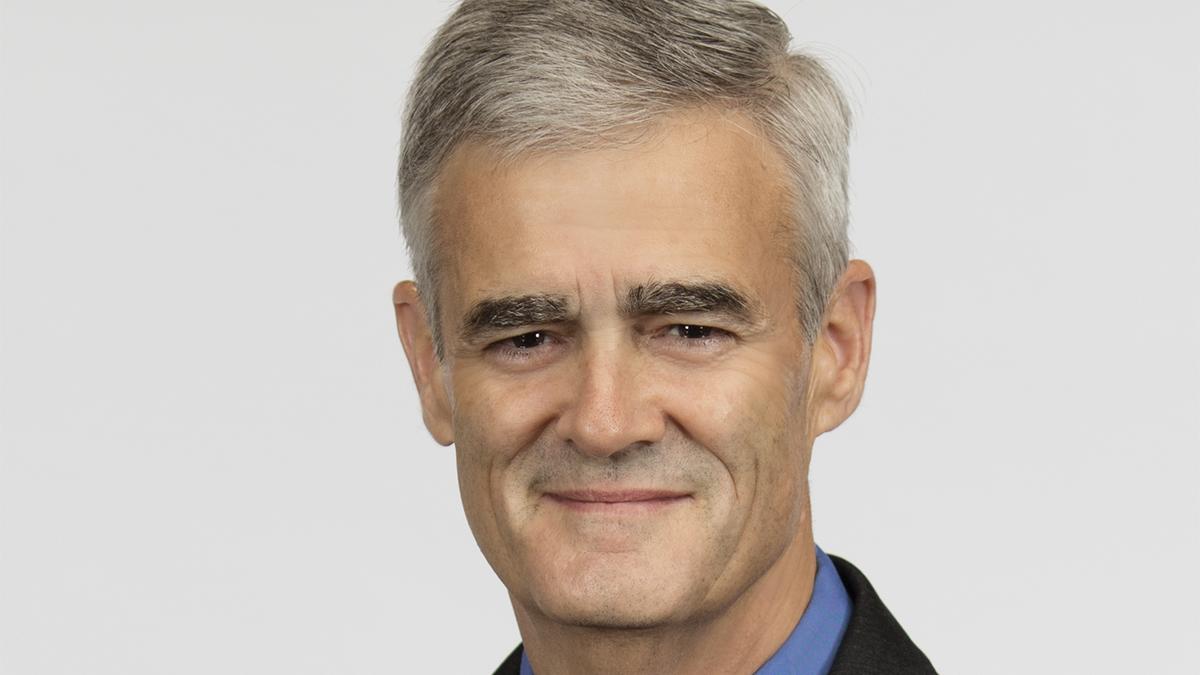
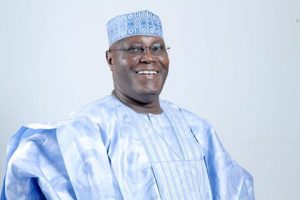
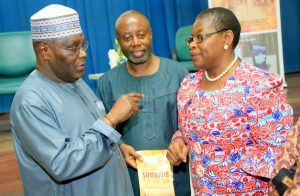
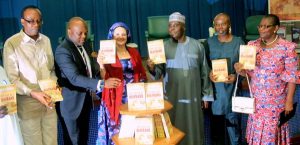
Chairman’s Remarks by Atiku Abubakar, GCON, former Vice President, Federal Republic of Nigeria, at the Public Presentation of the book, “We Are All Biafrans” by Chido Onumah, at the Yar’Adua Centre Abuja Tuesday 31st May, 2016. Protocol When I was invited to Chair this occasion, I immediately understood that the title of the book is a metaphor for the legitimate feelings of marginalization by diverse segments of Nigerians that cut across the country. Agitations by many right thinking Nigerians call for a restructuring and renewal of our federation to make it less centralized, less suffocating and less dictatorial in the affairs of our country’s constituent units and localities. As some of you may know, I have for a long time advocated the need to restructure our federation. Our current structure and the practices it has encouraged have been a major impediment to the economic and political development of our country. In short it has not served Nigeria well, and at the risk of reproach it has not served my part of the country, the North, well. The call for restructuring is even more relevant today in light of the governance and economic challenges facing us. And the rising tide of agitations, some militant and violent, require a reset in our relationships as a united nation. Some may say that we are saddled with more urgent challenges, including rebuilding our battered economy, creating jobs, fighting corruption and securing our people from terrorism and other forms of serious crimes. I believe, however, that addressing the flaws in our federation will help us address some of those very economic and security challenges facing this country. Nigeria must remain a united country. Our potentials are enormous. But I also believe that a united country, which I think most Nigerians desire, should never be taken for granted or taken as evidence that Nigerians are content with the current structure of the federation. Making that mistake might set us on the path of losing the country we love or, as Chido Onumah puts it, result in our “country sleepwalking to disaster.” Let me quickly acknowledge that no federal system is set for all time. There are always tensions arising from matters relating to the sharing of power, resources and responsibilities. But established democracies have developed peaceful mechanisms for resolving such conflicts among the tiers of government.They recognize that negotiations and compromises are eternal. How We Got Here: Oil Economy, Centralization and Biafranization The vast majority of Nigeria's young population will be forgiven for thinking that our lives have always revolved around oil and that the federal government has always been this domineering and controlling. They may not be aware that the federal system which we inherited at independence allowed the regions to retain their autonomy to raise and retain revenues, promote development, and conduct their affairs as they saw fit, while engaging in healthy competition with others. And they may not know that it was the emergence of military rule and the intervening civil war that led to the splintering and weakening of the federating units, centralization of resources and concentration of power at the federal level. The enormous revenues from oil rents encouraged the central government to play an increasingly domineering role in the economy and society. It assumed more responsibilities for infrastructure provisioning, education, social services and business investment. We now know that the more resources the federal government has, the more responsibilities it tends to assume.This then generates the need for ever more resources. As Chairman of the National Council on Privatization from 1999 to 2007, in my capacity as the Vice President, I was shocked when I saw firsthand the manner of businesses our federal government was involved in. These included not just such capital-intensive industries as steel and petrochemicals but brick-making factories and bakeries as well. These enterprises hardly made any profit. Rather they were being subsidized by the budget. As the government’s role continued to expand, the private sector was crowded out and private initiative, innovation and creativity suffered. Excessive dependence on oil revenues led to the collapse of our agriculture-based economy. It also exposed the Nigerian economy to volatile market swings, booms and bursts. And it brought with it enormous social consequences such as wealth without labour, briefcase contractors and generations of youth accustomed to aspiring to be employed by others rather than thinking of creating jobs for themselves and others. It also led to the neglect of internally generated revenue, especially taxation. Most of our state governments can no longer pay their workers’ wages until they collect monthly allocations from Abuja. Only Lagos State is currently able to generate up to 50% of its revenues internally, thereby reducing its dependence on allocations from Abuja. (And it is not because of the existence of many businesses in Lagos as some people like to point out. Businesses do not on their own send money to government). As we became more dependent on oil revenues we became lazier, more complacent, and our leaders became ever more unaccountable.Among the most destructive impacts of our dependence on oil is, perhaps, the corruption that it has fostered in the oil industry and society at large.Some of you are familiar with published reports that highlight discrepancies and opacity in data relating to the allocation of oil blocs as well as NNPC’s abuse of its duty as steward of our federation revenues. The result of all of this is that we have not made the needed investments in human capital development and the productive sectors of the economy. According to the Human Development Index, 70% of our population lives below the poverty line compared to 21.4% for Brazil, 40.5% for Angola and 0% for Norway, to mention a few comparable oil producing countries. More critical is the distortion of our federal structure by our dependence on oil. We now have the ridiculous situation where the federal government creates local governments, enshrines them in the constitution and allocates resources directly to them, with people even calling for more autonomy from state governments. Today virtually every section of our country feels marginalized – meaning they believe that other segments of society are prospering in ways they are not. We often interpret marginalization along regional, ethnic or religious lines, but experience has shown that this perception can exist even within homogenous communities due to uneven access to opportunity. For example we have communities feeling marginalized within their states or regions. Having established the ‘federal character’ of marginalization in Nigeria, it is imperative that our response to the issues raised by our various ‘Biafras’ across the country is holistic. I have long advocated for greater autonomy, powers and resources for our federating states. Some have retorted that state governors will abuse those powers and resources. Well the same logic applies to the federal level, which, as recent revelations show, is not without blemish. In fact the current situation encourages governors to abuse their power, do little to raise revenue and point fingers at the federal government, thereby making it more difficult for their people to hold them to account. What do we Need? First, a smaller, leaner federal government with reduced responsibilities. This means devolution of powers and resources to states and local governments. State and local governments should control education, health, agriculture, roads and other infrastructure. A true federal system will allow the federating states to keep their resources while the federal government retains the power of taxation and regulatory authority over standards. The result will be a political and governmental system that empowers local authorities and gives them greater autonomy to address peculiar local issues, while enhancing accountability and contributing to the general good of the country. Such a robust federal system would reduce the tensions that are built into our current over-centralized system. Second, autonomy for the component states and localities to determine their development priorities and wage structures. For instance, there is no reason for the governor of Akwa Ibom State to earn the same salary as the Governor of Benue State or for a teacher in Orlu to earn the same salary as the one in Abuja or Port Harcourt.The costs of living and revenue generating capacities vary widely across the country. Third, a tax-centred revenue base. Modern democracies derive their revenues from taxation whether or not they have fossil fuels and other natural resources – personal income tax, property tax, sales tax, corporate tax, licences, and duties. Taxation is a sustainable revenue base and one that compels governments to promote increased economic activities, and respond to the demands of their tax paying citizens. Fourth, enhanced, diversified economic activities and productivity in order to enlarge the tax base. The US, U.K., Canada, Malaysia, and UAE are all oil producers. But because they have diversified economies, oil does not dominate their government revenues and does not have the same distortionary effect it has on our own. Let’s compare Malaysia with Nigeria. Both countries were at a comparable level of development at independence but now Malaysia’s GDP per capita is $11,000 while Nigeria's is $3,000. Malaysia has foreign reserves of $100 billion and a sovereign wealth fund of $41 billion. In Malaysia manufacturing accounts for 40% of GDP and the country is rated 14th most competitive economy in the world. In Nigeria, however, manufacturing accounts for a mere 10% of GDP, and only 12% of the labour force. And Nigeria ranks 127th out of 144 in global competitiveness.Think about this for a moment: If the bulk of the revenues of our federal and state governments are dependent on the level of economic activities in the country, would we be shutting down the entire country or a state on election days, on census days and during environmental clean-up? I wish some of our researchers would calculate the resulting loss of productivity and incomes to individuals, families and the economy as a whole, and, therefore, potentially government revenues? Fifth, an end to the indigene-settler dichotomy. A modern united Nigerian society can only be built on the basis of common citizenship for all based on residency in a state or locality rather than the local government or ethnic group one is born into. Nigerians should be free to live, study and work anywhere in the country as long as they are law-abiding. We cannot claim to be promoting national unity while also promoting policies that tend to confine people to their places of birth. Sixth, state police to augment the federal police (for the states that so desire). This will help us to improve security, including fighting terrorism. Posting a police officer from Ganye to Eket may help promote culture sharing and integration, but it does little to prevent or fight crime. Crime is better fought by those who know the terrain and speak the local language. Ladies and gentlemen, Nigeria is not working as well as it should and part of the reason is the way we have structured our country and governance, especially since the late 1960s. The federal government is too big, and too powerful relative to the federating states. That situation needs to change, and calling for that change is patriotic. We must refrain from the habit of assuming that anyone calling for the restructuring of our federation is working for the breakup of the country. An excessively powerful centre does not equate with national unity. If anything,it has made our unity more fragile, our government more unstable and our country more unsafe. We must renegotiate our union in order to make it stronger. Greater autonomy, power and resources for states and local authorities will give the federating units greater freedom and flexibility to address local issues, priorities and peculiarities. It will help to unleash our people’s creative energies and spur more development. It will reduce the premium placed on capturing power at the centre. It will help with improving security. It will promote healthy rivalries among the federating units and local authorities. It will help make us richer and stronger as a nation. I commend the author, Chido Onumah, for his efforts in putting his thought-provoking writings together in this book. I hope that the essays contained therein will help to stir and deepen the debates on our federal structure, governance and intergovernmental relations. Hopefully those debates will help us effect the needed changes to make our country realize its full potentials in peace and greater harmony. This is an important way to prevent the birth and growth of more Biafras across our dear country. Thank you.