Does Nigeria really need a ‘Sovereign National Conference’?
February 06, 2014
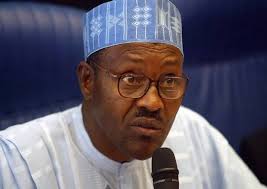
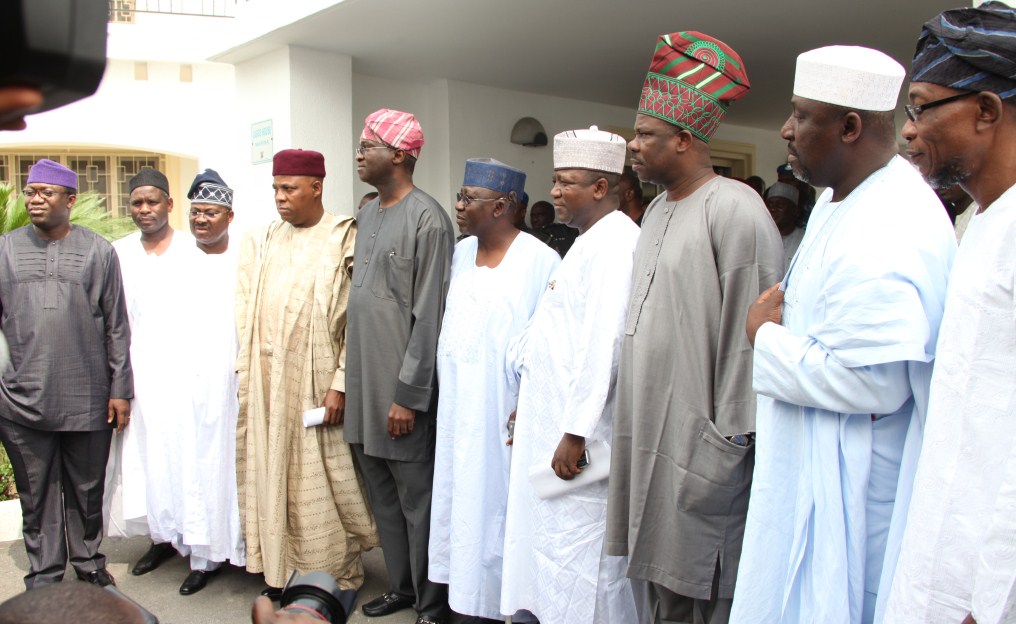
By Zainab Usman* [caption id="attachment_8393" align="alignleft" width="300"] APC members have called the Sovereign National Conference a “diversionary” tactic to avoid tackling Nigeria’s real problems.[/caption] In a few weeks, Nigerians across ethnic and regional divides will be gathering at a roundtable to discuss critical national issues. The imperative for this National Conference as a necessary discussion over Nigeria’s future was underscored by the President, Goodluck Jonathan, in his Independence Daycommemoration address in October 2013. No doubt, there is need for consensus among the country’s distinct ethnic and religious groups on critical governance issues such as the structure of government, federalism, revenue distribution, political representation and power sharing. Whether the National Conference taking place this year is capable of addressing Nigeria’s perennial existential problems is another question. The clamour for a national dialogue among Nigeria’s over 350 ethno-linguistic groups has been as old as the country itself, since the aftermath of the first military coup in 1966. Frequently called a ‘Sovereign National Conference’ (SNC), this roundtable discussion is regarded as the elixir to pervasive corruption, ethnic chauvinism, conflict and perversion of the rule of law all, of which have stifled economic development, social harmony and the forging of a collective Nigerian identity. The inflamed emotions in the debate for and against an SNC in the Nigerian public sphere inhibit a dispassionate interrogation of its practicality or necessity. For proponents, a national dialogue is a bottom-up democratic opportunity for many Nigerians to participate in nation-building in an otherwise exclusionary political system dominated by a handful of elites. These include the military and key players in the coups of 1966 who are the major power brokers today, their associates, powerful state governors, an increasingly powerful business class and media moguls. Gani Fawehinmi, a vociferous SNC advocate once lamented that Nigerians “never had the opportunity to make inputs into, accept or reject any constitutional framework through a referendum”. The national conversation is thus a catalytic opportunity for Nigerians to “negotiate the terms” of living together, within a contraption of British colonialism. In this pro-SNC camp are ethnic associations, marginalised politicians, activists, youth associations and other groups excluded from the power circle. Those opposing the National Conference argue that it is incapable of addressing Nigeria’s problems which are outcomes of governance, leadership and rule of law failures. Spending N7 billion ($42 million) towards yet another summit by a country with the highest number of out-of-school children in the world is regarded as “wasteful” by the Labour Union president and “diversionary”, by the main opposition party, the APC. Others regard it as an instrument for attaining a nefarious agenda by the specific government in power. This “agenda” covers a wide gamut of allegations from tenure elongation and covert constitutional amendment to regional domination and secession. Unsurprisingly, the expectations of what a National Conference can or cannot achieve range from the pragmatic to the utopian. It is not uncommon to hear the “we must talk” refrain in the wake of a Boko Haram attack, a kidnapping incident or a grand corruption scandal. As usual, the debates are laced with the poisonous sectional prejudices which normally characterise the country’s public discourse. What is paradoxical however, is the very elitist nature of the discourse over a summit aimed at inclusive nation-building. A recent opinion poll revealed that nearly 9 in 10 (88%) Nigerians are not aware of the call to constitute a sovereign national conference. Yet a pragmatic assessment of what the forthcoming National Conference can achieve against the huge expectations is necessary. For now, it is unlikely that it will create the needed national consensus on key issues in the country for two reasons. First it doesn’t seem markedly different from previous ones. Nigeria’s independence was the outcome of a series of negotiations between elite in the Northern and Southern regions mediated by British colonial administrators at conferences in Lagos and London in the late 1950s. Others include constitutional conferences organised by the military regimes of Muhammed-Obasanjo, Ibrahim Babangida and Sani Abacha, and the National Political Reform Conference (NPRC) organised by the Olusegun Obasanjo administration in 2005. Each conference has promised to address Nigeria’s critical problems but delivered so little. Resolutions incorporated into national laws, such as state creation or protection of minorities, have been insufficient in addressing sectional grievances or are just ignored. It does beg the question, if previous conferences have achieved little, what makes the latest incarnation different? Previous National Conferences have been ineffective in addressing Nigeria’s existential challenges because they have been reactionary rather than proactive. Right from the first truly sovereign dialogue by military rulers in 1967 in Aburi, Ghana, in the aftermath of the bloody coups of 1966, these conferences have been crisis-management instruments hurriedly organised to stem imminent crisis or to further a specific political agenda on the eve of a political transition. Consequently, their reactionary nature hinder the conferences’ effectiveness in finding enduring solutions to resource distribution, the fear of domination, effective political representation and other contentious matters. While General Abacha’s National Constitutional Conference (NCC) was a reaction to the simmering crisis of the June 1993 elections annulment, Obasanjo’s in 2005 was widely regarded as a platform for realising an extra third term in office beyond the constitutionally permitted two terms. Now Goodluck Jonathan, treading a well-worn path is organising his own National Conference on the eve of the 2015 elections. This is not to entirely dismiss the potentially beneficial outcomes of a national dialogue in Nigeria. In the past, these have included: the 1979 constitution which provided for a presidential system of government and laid the foundation of the country’s current constitution, the delineation of the six geo-political zones in the country by General Abacha’s conference and allocating more revenue to the oil-producing Niger-Delta states by Obasanjo’s conference. Yet the knotty issues which push Nigeria teetering on the precipice remain unresolved. Notwithstanding, the forthcoming National Conference may present an opportunity to mitigate the country’s growing polarisation since the 2011 elections and prevent future political crises. This would require the roundtable to negotiate robust and acceptable power-sharing formula among Nigeria’s regions, ethnic and religious groups. This is because the country’s political crises are mostly rooted in the turbulence of political transitions where political institutions are subverted to further the despotic agenda of an individual or the dominance of a particular group. The Obasanjo Third Term Saga in 2005-2006 and the turbulence that threatened Goodluck Jonathan’s ascension to the presidency in 2010 are recent instances. A power sharing formula in Nigeria has been previously proposed, where top executive positions rotate periodically around all six regions to give every part of the country a fair shot. Another variant could be modelled along the Federal Council of Switzerland where the office of the President as the head of state is replaced with a six-member presidential council representing all regions to reduce the individual executive’s discretionary powers and the violent competition for that position. This de-concentration of powers away from one individual will blunt tensions over political transitions, assure all Nigerians of their region’s legitimate ‘turn’ at the highest level of leadership and may lay the foundation for constructing a collective national identity. As previous National Conferences have shown, systemic challenges such as revenue allocation formula and devolution of powers to sub-national governments cannot be fully addressed within one summit but require an incremental process of consensus-building at the National Assembly over the long term. Addressing surface problems such as corruption, insecurity and disregard for the rule of law is not contingent on the creation of new laws. It requires unwavering political commitment and reforms of existing institutions, anti-corruption and law enforcement agencies. Clearly, Nigerians need to forge a consensus on key existential issues that perennially plunge the country into crisis. Yet it is difficult not to wonder whether yet another talk shop is the only means of reaching consensus. Or whether a President in the twilight of his term in office, facing intense opposition from within his party and without, is capable of organising a National Conference that will sincerely address Nigeria’s deep structural political problems. *Source African Arguments.Zainab Usman is a doctoral candidate in International Development, University of Oxford.]]>