Nelson Mandela and the Rainbow Nation That He Never Saw
January 09, 2014
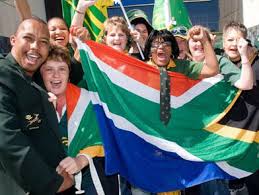
The South African economy is the largest in Africa. Yet, since 2009 SA has had the distinction of being the most economically skewed society worldwide. Consciousness of this lopsidedness is not new. It grasped the attention of international social critics as far back as May 1998 when Thabo Mbeki, then the Vice President of the Republic, stated before Parliament that SA was not a nation; it was two nations rolled into one. To Mbeki, SA was a superficial blend of a small affluent white society whose lifestyles rivaled the superrich anywhere in the world. The other SA was comprised of Black fellow citizens who ware locked in abject poverty without a way out. Mbeki’s statement came to be known as the ‘Two Nations Speech’, a candid display of a racial-economic divide seen around the world. In trying to understand the South African socio-economic inequality, critics agreed that colonialism and apartheid played a major part. But regarding post-apartheid era, a small undercurrent of thought emerged suggesting that the country’s socio-economic divide was aggravated and enhanced by ‘compromised negotiations’ that were carried out by the late liberation icon, Nelson Mandela. This proposition remained relatively muted during Mandela’s lifetime presumably because few dared to stand up and be counted as Madiba’s detractors during his lifetime. After all, he was the beloved, ultimate victim of apartheid. Now in post-Mandela era, that same line of reasoning is audible. In the negotiations to dismantle apartheid in the early 1990s, the claim goes, Mandela was admirably tough on the political front, but he equally too soft on the economic side. In the end, Madiba settled for a lopsided economic deal that disinherited his people. As one globally acclaimed analyst summed up the deal, “a great Faustian bargain was struck between the two races. The Whites said to the Blacks, ‘You take the crown and we will keep the jewels.’” The economic ‘soft-to-apartheid’ logic has been echoed by prominent personalities deeply loyal to Mandela, including Archbishop Desmond Tutu and Mandela’s former wife, Winnie. Its proponents do not necessarily accuse Mandela of deliberate wrongdoing but they do assert that more could have been extracted in form of economic concessions for the dispossessed Blacks. Some have been known to whisper that Mandela went too far to accommodate the apartheid establishment in a manner that verged on appeasement. In return he got a ‘Sucker’s Deal’ economically. However, neither deliberate law breaking nor corruption was suggested. In fact, ethically and legally, Mandela’s post-apartheid leadership is generally accepted as having been virtually impeccable. A case could be made that Mandela’s overall soft-economic-approach to the demise of apartheid was not an ad hoc matter,that it derived impetus from older Pan-African thought. Indeed, Ghana’s Kwame Nkrumah did address the same issue of what domain should African anti-colonialism target first: political or economic power? Nkrumah responded in his capacity as the elder statesman of African nationalism by asserting, ‘Seek ye first the political kingdom and all things shall be added unto you.’ During the negotiations to abolish apartheid, was Mandela aware of Nkrumah’s ‘political kingdom first’ dictum? He would be forgiven if he was not. After all, he was already the ‘world’s most famous political prisoner’ when African nationalism took off in earnest and such debates became commonplace. Yet, evidence suggests otherwise. In addition to his well-known photographic memory, Mandela was well read. Professor Ali Mazrui tells of how he was once in a conference and, accidentally, bumped into Mandela in the hallway. Startled, Mazrui greeted the global icon and introduced himself as Ali Mazrui. “Oh, Professor Ali Mazrui,” Mandela responded, “nice to meet you! I used to read your publications when I was in prison!” If Mandela remembered Mazrui’s name and that he had read his publications while in prison, he certainly knew of the economic-political kingdoms debate relative to African decolonization. Indeed Nkrumah’s dictum on this issue is one of his three most cited decrees ever and Mazrui has published extensively on Nkrumah. In de-emphasizing the economic front in the negotiations to abolish apartheid, was Mandela of the early 1990s acting under the spell of Nkrumah, the leading continental Pan-Africanist? In all likelihood, Mandela of the early 1990s was less preoccupied with ideologies than the practical circumstances that surrounded him, realities that were uniquely South African. For the survival of his country, he chose to reach out for political kingdom first by following the path of reconciliation and nation-building. An attempt to build a Rainbow Nation peacefully was indeed the only viable alternative. In this sense, Mandela was not establishing a new tradition. He was following in the footsteps Kenya’s Founding father, Jomo Kenyatta, who also left a colonial jail intent on writing a book clearly aimed at calming down his former British colonial tormentors. He entitled the book, Suffering without Bitterness. In early the 1990s, most of the world was still too caught up in the euphoria of Mandela’s release from prison to notice that the economy of the country that he was soon to soon start governing was in shambles. For decades, SA had been the world’s number one pariah state and had been victimized for being ‘God’s forsaken country.’ Its economy was virtually wrecked by strikes and rampant violence, an atmosphere of catastrophe, instability and uncertainty prevailed. The mood of doom that hung over SA deteriorated immensely from the 1980s and was profoundly unattractive to foreign investors. International economic sanctions had become universal and were now biting deeply. And then in 1986 the sanctions were boosted by the passage of the US Congressional Comprehensive Anti-Apartheid Act. American divestment movement was also gaining momentum and contributed further to apartheid’s economic isolation. Finally, there were anti-apartheid protests in almost every Western city. It was not in exaggeration that white South Africans lamented of total onslaught against them. Those economic hardships left little room for Mandela to demand remedial socio-economic programs such as nationalizations of mines and land reforms. Realistically then, Mandela did not deliberately abandon his people economically in the bid to dismantle apartheid; the state of the economy did the compromising. It is often not realized that in the early 1990s, Mandela walked a tight rope; SA could have easily slipped into an ugly race war. On one side of the pole were millions of Blacks who had endured decades of staggering deprivation and humiliation for no fault of their own. By the 1990s, they were surely angry and in a hurry. They wanted drastic change; they were ready to chant: give me liberty or give me death. At the other end of the spectrum were the whites who had always known privileged existence. In case violence erupted, to them it was a matter of do or die. Taking their property would have been the ultimate crossing of the red line. Mandela was singularly called upon to use the force of his personality to assure both sides that SA was big enough for both sides and by insisting that it belonged to all those who lived in it, a Rainbow Nation. His primary mission became to persuade both sides that violence was not an option. To fellow Blacks he repeatedly said, “Some of us talk of revolutionary change like we are dealing with a defeated enemy, far from it.” In other words, violence at that juncture was tantamount to racial suicide. Simultaneously, Mandela was telling the white right-wing, “If you want to go to war, I must be honest and admit that we cannot stand up to you in the battlefield. It will be a long and bitter struggle. Many people will die and the country may be reduced to ashes. But you cannot win because of our numbers. You cannot kill all of us. And you cannot win because of the international community; they will rally to our side and they will stand with us.” Mandela did play his historical role in terminating political apartheid and bringing democracy to SA peacefully. For that he won the 1993 Nobel Peace Prize. But the task of fusing socio-economic equality into the political kingdom turned out to be an infinitely more difficult undertaking. The year 2014 marks two decades after demolition of political apartheid. Yet, de facto economic apartheid remains intact. South African Blacks remain horrifically poor in absolute and relative terms. Indeed in 2009, SA sidelined Brazil as the most skewed society in the world. How to narrow the gap between the White South African haves and Black have-nots, how to construct bona fide fundamentals of a Rainbow Nation, eluded Mandela. Indeed it remains the most pressing challenge of post-apartheid SA in the years and decades to come. Unlike Cuba’s Fidel Castro, Nelson Mandela’s was an incomplete revolution, a work in progress. **James N. Kariuki is Professor of International Relations (Emeritus) and an independent writer. He is based in South Africa. Views expressed in the blog Global Africa are his. ]]>

 The South African economy is the largest in Africa. Yet, since 2009 SA has had the distinction of being the most economically skewed society worldwide. Consciousness of this lopsidedness is not new. It grasped the attention of international social critics as far back as May 1998 when Thabo Mbeki, then the Vice President of the Republic, stated before Parliament that SA was not a nation; it was two nations rolled into one. To Mbeki, SA was a superficial blend of a small affluent white society whose lifestyles rivaled the superrich anywhere in the world. The other SA was comprised of Black fellow citizens who ware locked in abject poverty without a way out. Mbeki’s statement came to be known as the ‘Two Nations Speech’, a candid display of a racial-economic divide seen around the world. In trying to understand the South African socio-economic inequality, critics agreed that colonialism and apartheid played a major part. But regarding post-apartheid era, a small undercurrent of thought emerged suggesting that the country’s socio-economic divide was aggravated and enhanced by ‘compromised negotiations’ that were carried out by the late liberation icon, Nelson Mandela. This proposition remained relatively muted during Mandela’s lifetime presumably because few dared to stand up and be counted as Madiba’s detractors during his lifetime. After all, he was the beloved, ultimate victim of apartheid. Now in post-Mandela era, that same line of reasoning is audible. In the negotiations to dismantle apartheid in the early 1990s, the claim goes, Mandela was admirably tough on the political front, but he equally too soft on the economic side. In the end, Madiba settled for a lopsided economic deal that disinherited his people. As one globally acclaimed analyst summed up the deal, “a great Faustian bargain was struck between the two races. The Whites said to the Blacks, ‘You take the crown and we will keep the jewels.’” The economic ‘soft-to-apartheid’ logic has been echoed by prominent personalities deeply loyal to Mandela, including Archbishop Desmond Tutu and Mandela’s former wife, Winnie. Its proponents do not necessarily accuse Mandela of deliberate wrongdoing but they do assert that more could have been extracted in form of economic concessions for the dispossessed Blacks. Some have been known to whisper that Mandela went too far to accommodate the apartheid establishment in a manner that verged on appeasement. In return he got a ‘Sucker’s Deal’ economically. However, neither deliberate law breaking nor corruption was suggested. In fact, ethically and legally, Mandela’s post-apartheid leadership is generally accepted as having been virtually impeccable. A case could be made that Mandela’s overall soft-economic-approach to the demise of apartheid was not an ad hoc matter, that it derived impetus from older Pan-African thought. Indeed, Ghana’s Kwame Nkrumah did address the same issue of what domain should African anti-colonialism target first: political or economic power? Nkrumah responded in his capacity as the elder statesman of African nationalism by asserting, ‘Seek ye first the political kingdom and all things shall be added unto you.’ During the negotiations to abolish apartheid, was Mandela aware of Nkrumah’s ‘political kingdom first’ dictum? He would be forgiven if he was not. After all, he was already the ‘world’s most famous political prisoner’ when African nationalism took off in earnest and such debates became commonplace. Yet, evidence suggests otherwise. In addition to his well-known photographic memory, Mandela was well read. Professor Ali Mazrui tells of how he was once in a conference and, accidentally, bumped into Mandela in the hallway. Startled, Mazrui greeted the global icon and introduced himself as Ali Mazrui. “Oh, Professor Ali Mazrui,” Mandela responded, “nice to meet you! I used to read your publications when I was in prison!” If Mandela remembered Mazrui’s name and that he had read his publications while in prison, he certainly knew of the economic-political kingdoms debate relative to African decolonization. Indeed Nkrumah’s dictum on this issue is one of his three most cited decrees ever and Mazrui has published extensively on Nkrumah. In de-emphasizing the economic front in the negotiations to abolish apartheid, was Mandela of the early 1990s acting under the spell of Nkrumah, the leading continental Pan-Africanist? In all likelihood, Mandela of the early 1990s was less preoccupied with ideologies than the practical circumstances that surrounded him, realities that were uniquely South African. For the survival of his country, he chose to reach out for political kingdom first by following the path of reconciliation and nation-building.