PAN AFRICAN VISIONSPAN AFRICAN VISIONSPAN AFRICAN VISIONS
Font ResizerAa
  • Home
  • Politics
    PoliticsShow More
    Africa’s Fragmented Voices in a World Pulled Apart by the US and Iran

    By Amb. Godfrey Madanhire* The war between the United States and Iran…

    By
    Pan African Visions
    Macky Sall’s UN Bid Is a High-Stakes Test of Power, Principle and the Veto System

    By Adonis Byemelwa Macky Sall's intention to run for Antonio Guterres's job…

    By
    Pan African Visions
    US Sanctions Rwanda’s Army Over DRC Conflict; Kigali Calls Move ‘One-Sided’

    By Jean-Pierre A The United States Department of the Treasury has sanctioned…

    By
    Pan African Visions
    The Hormuz Tax: Why Africa Pays the Bill for Wars It Never Voted For

    By James Woods* On the morning of 28 February 2026, the world…

    By
    Pan African Visions
    Sierra Leone Evacuates Nationals from Iran as Regional Tensions Escalate

    By Ishmael Sallieu Koroma FREETOWN — The Government of Sierra Leone has…

    By
    Pan African Visions
  • Business
    BusinessShow More
    Africa & the Iran War : What The Oil-Price Shock And Shipping Disruptions Mean For Economies, Fuel & Food Supply Chains, Budgets, Trade Finance, Market Access, Liquidity, Inflation And The Cost Of Living

    By Rene Awambeng, Senior Executive Officer, Premier Invest* With Brent spiking toward…

    By
    Pan African Visions
    Frontier’s Partnership With TECSEP Fails to Silence African Energy Chamber Protest

    By Samuel Ouma The Africa Energies Summit is facing mounting scrutiny following…

    By
    Pan African Visions
    African Iron Ore: Driving Industrialization, Investment and Regional Growth

    -African Mining Week 2026 will showcase investment and lucrative prospects within Africa’s…

    By
    Pan African Visions
    African Energy Chamber Calls for Boycott of London’s Africa Energies Summit Over Alleged Hiring Discrimination

    By Ajong Mbapndah L The Executive Chairman of the African Energy Chamber,…

    By
    Pan African Visions
    African Energy Chamber Amplifies Diversity Fight in Africa’s Energy Sector

    By Ajong Mbapndah L As Africa’s oil and gas sector gathers unprecedented…

    By
    Pan African Visions
  • Health
  • Sport
    SportShow More
    Francis Ngannou and Professional Fighters League Part Ways After Two-Year Partnership

    By Boris Esono Nwenfor The Professional Fighters League and Cameroonian mixed martial…

    By
    Pan African Visions
    CAF Shifts 2026 Women’s AFCON to July–August

    By Ngunyi Sonita Nwohtazie BUEA, PAV – The Confederation of African Football…

    By
    Pan African Visions
    Cameroon : Indomitable Lions Set for Crucial FIFA Series 2026 Fixtures in Oceania

    By Boris Esono Nwenfor BUEA, PAV – The Cameroon national football team…

    By
    Pan African Visions
    Angola Delivers Third FIFA- and Union of European Football Associations (UEFA)-Compliant Stadium in Five Months

    -Huambo complex strengthens Angola’s - and Africa’s - capacity to host major…

    By
    Pan African Visions
    Basketball Africa League Announces 12 Teams and Group Phase Schedule for 2026 Season

    -This season, the national league champions from seven countries – Angola, Egypt,…

    By
    Pan African Visions
  • Multimedia
    • Sports
    • Documentaries
    • Comedy
    • Music
    • Interviews
  • APO/PAV
  • AMA/PAV
    AMA/PAVShow More
    U.S. Embassy Pretoria Celebrates Mandela Day at Zola Community Health Center in Soweto

    PRETORIA, South Africa, July 22, 2019,-/African Media Agency (AMA)/- To honor Nelson Mandela’s…

    By
    Pan African Visions
    Zimbabwe: Droughts leave millions food insecure, UN food agency scales up assistance

    Severe drought has rendered more than a third of rural households in…

    By
    Pan African Visions
    Mozambique: Opposition candidate facing pre-election death threats and intimidation

    GENEVA, Switzerland, July 19, 2019,-/African Media Agency (AMA)/- The main opposition candidate in…

    By
    Pan African Visions
    The END Fund – Making everyday a Mandela Day

    JOHANNESBURG, South Africa, July 18th 2019,-/African Media Agency/- 2018 was a true landmark…

    By
    Pan African Visions
    Innovation leaders gather in Nairobi to unpack Intelligent Enterprise opportunities at SAP Innovation Day.

    NAIROBI, Kenya , July 18, 2019 -/African Media Agency (AMA)/- About 600…

    By
    Pan African Visions
  • Media OutReach
    Media OutReachShow More
    HKPC’s 2nd “New Productive Forces” Job Fair 2026 Successfully Concluded Over 2,000 Job Seekers Connecting with Over 10,000 I&T Positions

    HONG KONG SAR - Media OutReach Newswire - 9 March 2026 -…

    By
    Pan African Visions
    HKPC Establishes New “Future Life & Health Tech Centre”

    Driving R&D Translation and Sector Collaboration; Elevating Hong Kong as a Global…

    By
    Pan African Visions
    WELEDA x Stella McCartney: Paris Fashion Week / Skin Food: 100 years of loving skin

    ARLESHEIM, SWITZERLAND - Newsaktuell - 9 March 2026 - During this season's…

    By
    Pan African Visions
    Food Expo PRO and Hong Kong International Tea Fair: Aisa’s Key Trade Event for F&B

    HONG KONG SAR - Media OutReach Newswire - 9 March 2026 -…

    By
    Pan African Visions
    Esperanza Securities Marks a Major Milestone for Its Inaugural Entertainment STO – Charting New Model for Fans Economy and STO Investments

    HONG KONG SAR - Media OutReach Newswire - 9 March 2026 -…

    By
    Pan African Visions
  • Blogs
    • African Show Biz
    • Insights Africa
    • Cumaland Diary
    • Kamer Blues
    • Nigerian Round Up
    • Ugandan Titbits
    • African View Points
    • Global Africa
  • Magazines
Search
  • Global Africa
  • Interviews
  • Politics
  • Sports
  • African Newsmakers
  • African View Points
  • Development
  • Discoveries
  • Education
© 2026. Pan African Visions. All Rights Reserved.
Reading: Nelson Mandela and the Elusive Rainbow Nation
Font ResizerAa
PAN AFRICAN VISIONSPAN AFRICAN VISIONS
  • Politics
  • Business in Africa
  • Blog
  • Health
  • Sports
  • Entertainment
  • Multimedia
  • Contact
Search
  • Home
  • Politics
  • Business
  • Health
  • Sport
  • Multimedia
    • Sports
    • Documentaries
    • Comedy
    • Music
    • Interviews
  • APO/PAV
  • AMA/PAV
  • Media OutReach
  • Blogs
    • African Show Biz
    • Insights Africa
    • Cumaland Diary
    • Kamer Blues
    • Nigerian Round Up
    • Ugandan Titbits
    • African View Points
    • Global Africa
  • Magazines
Have an existing account? Sign In
Follow US
© 2025 Pan African Visions.  All Rights Reserved.
PAN AFRICAN VISIONS > Blog > Africa > SOUTH AFRICA > Nelson Mandela and the Elusive Rainbow Nation
BlogsFeaturedGlobal AfricaOpinionSOUTH AFRICA

Nelson Mandela and the Elusive Rainbow Nation

Last updated: July 24, 2019 10:10 am
Pan African Visions
Share
SHARE

James N. Kariuki*

In addition to being the largest economy in Africa, post-apartheid South Africa beats the entire world as the most skewed society worldwide. Discussion of this lopsidedness is not new. It gathered momentum from May 1998 when the country’s Deputy President, Thabo Mbeki, stated before the National Assembly that SA was still not a nation, it was merely two nations rolled into one.

To Mbeki, SA was a synthesis of a small and affluent white society whose lifestyles rivaled the superrich of the world. In the other SA, the majority of fellow citizens languished in abject poverty and happened to be black. Mbeki’s statement came to be known as the ‘Two Nations Speech,’ a concise indictment that was heard around the world.

In Mbeki’s vision, it would take a long time for this South African divide, a 350 years’ legacy of ‘inequality,’ to be obliterated and allow the country to evolve the necessary psychological cement to form a bona fide nation. Until then, talk of a rainbow nation was merely a dream deferred. And a dream deferred swells into explosive rage which, ultimately, explodes. Was Mbeki warning about the possibility of racial confrontation?

In trying to grasp the phenomenon, a small school of thought has since emerged that suggests that South Africa’s post-apartheid economic gap originated partly from history and partly from compromised negotiations on the part of the liberation icon, Nelson Mandela. While Madiba was admirably tough on the political front, he was too soft on the economic issues in dealing with the apartheid machine. In the end, Mandela settled for a deficient economic deal for his people. In the view of one prominent analyst, “a great Faustian bargain was struck between the two races. The Whites said to the Blacks: ‘You take the Crown and we will keep the Jewels.’”

This view of economic-soft-to-apartheid approach has been articulated by prominent personalities deeply loyal to Mandela. The list includes his former wife, Winnie Mandela, Archbishop Desmond Tutu and the iconic Pan-African analyst, Professor Ali Mazrui. They do not accuse Mandela of deliberate sell-out but they do suggest that he could have done better for fellow Africans. Neither wrong-doing nor corruption is suggested anywhere. Other than this aspect of Mandela’s leadership, his political legacy is unblemished.

It is arguable that Mandela’s approach to dislodge apartheid was not an accident; it was inspired by older African thought. Indeed, Ghana’s Kwame Nkrumah once addressed the same question of, given the choice, what should come first target: political or economic power? Nkrumah spoke as an elder statesman of African nationalism in his dictum, ‘Seek ye first the political kingdom, and all things shall be added unto you.’ This is one of Nkrumah’s three most cited dogmas—ever. Was Nelson Mandela of 1994 acting under the ideological spell of former Pan-African icon?


In all likelihood, Mandela responded to the circumstances that surrounded him, realities that were uniquely South African. He decided to seek a political kingdom first by pursuing reconciliation and nation-building instead of confrontational economic kingdom. He realized that pushing for blacks’ economic sovereignty at that time (for example nationalization of mines and forceful takeover of white-owned land) would have triggered racial violence. Mandela was mindful that SA could not survive the loss of life, white skills and capital that would follow.  He, therefore, opted to go softly-softly on the economic domain to save the nation.


Prof-James-KariukiClearly, Mandela was a profoundly practical man. By sparing apartheid economic structures, he responded pragmatically to the realities that surrounded him. Against this background, his critics, the so-called ‘romantic revolutionaries,’ have tended to be dismissed for their indictment of Madiba for “being too conciliatory, too soft on the whites in negotiating our transition.” What tangible realities did Mandela face?

In the run up to the 1994 negotiations, South Africa was a deeply polarized society; violence and strife were everywhere. Indeed, it is an everlasting tribute to Mandela’s vision that he accepted and engaged the white military leadership, who stood prepared to welcome a racial conflict. After all, military lopsidedness was immense in favor of the apartheid machine.

I once heard Mandela blast his black fellows via the public media to the effect that ‘Some of us talk of revolutionary change as if we are dealing with a defeated enemy; far from it.’ These were code words for: ‘entertaining violence at this juncture is tantamount to mass suicide.’

At just about the same time that Mandela was publicly warning his people of the inadequacies of violence, he was secretly reasoning just as firmly against violence with the superbly trained and armed white right-wing military. As he once told a group of professional Afrikaner solders, “If you want to go to war, I must be honest and admit that we cannot stand up to you in the battlefield…. It will be a long and bitter struggle. Many people will die and the country may be reduced to ashes… but you cannot win because of our numbers. You cannot kill all of us. And you cannot win because of the international community; they will rally to our support and they will stand with us.”

Words of this nature turned the tide from looming deadly racial conflict to reconciliation and nation-building. However imperfect reconciliation might have been, it was infinitely preferable to racial war.

Mandela had considered the option of a civil war in SA and had dismissed it. He understood that demanding further economic concessions from the apartheid monster was crossing the red line. Blaming Mandela for what he did in 1994 is naive. He did what he could with what he had at this disposal.  The challenge is what the current leadership should do given that the circumstances are different from those that Mandela faced.

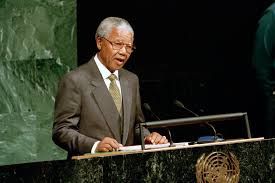
Mandela has finally died but he left this world a man in peace. He did not see the rainbow nation that he so craved for his country. He left a country more prepared to become a rainbow nation if nurtured carefully. He left the world a frail man but spiritually he was a giant that the world adored in every way possible. Most importantly he left South Africans of all colors shedding tears that their icon was no more.  In unison, they said to him: we will miss you Madiba.  That was enough Rainbow Nation in Nelson Mandela’s spirit.

*James Kariuki is Professor of international Relations and an independent writer. He is a Kenyan based in Johannesburg, South Africa. Views expressed in the blog Global Africa are his.


Share This Article
LinkedIn Email Copy Link Print
Previous Article RwandAir looks to widen West African market share
Next Article “The struggle was Madiba’s life.”
Leave a Comment

Leave a Reply Cancel reply

Your email address will not be published. Required fields are marked *

Your Trusted Source for Accurate and Timely Updates!

Our commitment to accuracy, impartiality, and delivering breaking news as it happens has earned us the trust of a vast audience. Stay ahead with real-time updates on the latest events, trends.
FacebookLike
XFollow
InstagramFollow
LinkedInFollow
Diestmann

You Might Also Like

AlgeriaAngolaBenin

Malawi: Health Workers Start Strike Over Allowances Demands

By
Pan African Visions
Musa Batchilly is Secretary General of opposition Gambia Action Party (GAP)
AlgeriaAngolaBenin

Gambia Opposition Leader Describes Gov’t as ‘Pocket Reformers’

By
Pan African Visions
Shocking images of Thomas Nganyu Tangem chained on his hospital bed were in circulation a few days to before he died
AlgeriaAngolaBenin

Cameroon: Outrage as Anglophone detainee dies while chained to hospital bed

By
Pan African Visions
Independent National Electoral Commission (INEC) Chairman Attahiru Jega displays the timetable for the 2011 general elections during a news conference in Nigeria's federal capital Abuja (File Photo).
FeaturedNIGERIANigerian Round Up

Nigeria Electoral Chief Vows to Organize Credible Elections

By
Pan African Visions
PAN AFRICAN VISIONS
Facebook Twitter Youtube Rss Medium

About US


Pan African Visions: Your instant connection to breaking stories and live updates. Stay informed with our real-time coverage across politics, tech, entertainment, and more. Your reliable source for 24/7 news.

  • 7614 Green Willow Court, Hyattsville, MD 20785 , USA
  • +1 24 0429 2177
  • pav@panafricanvisions.com
Top Categories
  • Politics
  • Business in Africa
  • Blog
  • Health
  • Sports
  • Entertainment
  • Multimedia
  • Contact
Usefull Links
  • PAV – Home
  • Contact Us
  • About Us
  • Complaint
  • Advertise With Us

© 2025 Pan African Visions. 
All Rights Reserved.