PAN AFRICAN VISIONSPAN AFRICAN VISIONSPAN AFRICAN VISIONS
Font ResizerAa
  • Home
  • Politics
    PoliticsShow More
    Ramaphosa’s Mea Culpa Confronts South Africa’s Record On Foreign Nationals While Championing A More Integrated Southern Africa

    South African President Cyril Ramaphosa condemns discrimination against foreign nationals, reminds South…

    By
    Pan African Visions
    Zambia Begins High-Stakes Election as Voters Choose the Country’s Next Political Direction

    By Burnett Munthali LUSAKA, Zambia — Zambians are voting in a closely watched…

    By
    Pan African Visions
    US Senators Raise Election Concerns As Zambia Heads To The Polls

    By Ajong Mbapndah L Four senior United States senators have raised concerns…

    By
    Pan African Visions
    Gonzales Challenges Zambia to Defend Its Democratic Legacy

    By Ajong Mbapndah L Former United States Ambassador to Zambia Michael C.…

    By
    Pan African Visions
    Mutharika Calls For Peace As Zambia Heads To The Polls

    By Joseph Dumbula Malawi’s President Peter Mutharika has called on Zambians to…

    By
    Pan African Visions
  • Business
    BusinessShow More
    Apex Media Services Gets New CEO as Company Rebrands to Block Media Services Ltd 

    By Mutebi Farooq KAMPALA — Apex Media Services has undergone a major…

    By
    Pan African Visions
    Beyond Visibility: What Africa’s Digital Economy Owes Its Women Leaders

    By Kadi Diallo, Head of Content for Africa Tech Festival * Look…

    By
    Pan African Visions
    Sierra Leone’s Rise As Africa’s Next Energy Great Story

    From political vision to institutional excellence, Sierra Leone's emerging energy renaissance reflects…

    By
    Pan African Visions
    Brian Wesaala On Building Africa’s Football Economy

    As African football seeks to convert its immense talent into lasting economic…

    By
    Pan African Visions
    Sierra Leone : The Strategic Transformation of SLPHA

    As Sierra Leone pursues economic transformation and deeper regional integration, its ports…

    By
    Pan African Visions
  • Health
  • Sport
    SportShow More
    Malawian Lender Announces K245 Million Bonus After Historic World Cup Qualification

    By Burnett Munthali RABAT, Morocco — Malawi’s national women’s football team has…

    By
    Pan African Visions
    Malawi’s Scorchers Rewrite African Football History With WAFCON Final Berth

    By Burnett Munthali Rabat, Morocco — Malawi’s Scorchers have secured a historic…

    By
    Pan African Visions
    Brian Wesaala On Building Africa’s Football Economy

    As African football seeks to convert its immense talent into lasting economic…

    By
    Pan African Visions
    Cameroon Stun Defending Champions Nigeria to Reach WAFCON Semi-finals

    By Boris Esono Nwenfor BUEA, PAV – Cameroon have eliminated defending champions…

    By
    Pan African Visions
    Malawi Reach WAFCON Semi-Finals In Historic Run

    By Burnett Munthali Malawi have reached the semi-finals of the Women's Africa…

    By
    Pan African Visions
  • Multimedia
    • Sports
    • Documentaries
    • Comedy
    • Music
    • Interviews
  • APO/PAV
  • AMA/PAV
    AMA/PAVShow More
    U.S. Embassy Pretoria Celebrates Mandela Day at Zola Community Health Center in Soweto

    PRETORIA, South Africa, July 22, 2019,-/African Media Agency (AMA)/- To honor Nelson Mandela’s…

    By
    Pan African Visions
    Zimbabwe: Droughts leave millions food insecure, UN food agency scales up assistance

    Severe drought has rendered more than a third of rural households in…

    By
    Pan African Visions
    Mozambique: Opposition candidate facing pre-election death threats and intimidation

    GENEVA, Switzerland, July 19, 2019,-/African Media Agency (AMA)/- The main opposition candidate in…

    By
    Pan African Visions
    The END Fund – Making everyday a Mandela Day

    JOHANNESBURG, South Africa, July 18th 2019,-/African Media Agency/- 2018 was a true landmark…

    By
    Pan African Visions
    Innovation leaders gather in Nairobi to unpack Intelligent Enterprise opportunities at SAP Innovation Day.

    NAIROBI, Kenya , July 18, 2019 -/African Media Agency (AMA)/- About 600…

    By
    Pan African Visions
  • Media OutReach
    Media OutReachShow More
    “YOU BRING CHARM TO THE WORLD — The 18th Global Chinese Awards” Concludes in Beijing

    BEIJING, CHINA – Media OutReach Newswire – 14 August 2026 – The…

    By
    Pan African Visions
    NINGJI Takes Centre Stage at KLCC, Strengthening Its Position as a Benchmark for Southeast Asian Expansion Through Five Key Localization Strategies

    HONG KONG SAR - Media OutReach Newswire - 14 August 2026 –…

    By
    Pan African Visions
    Powering the Future – Greenworks Power Takes Center Stage at North American Dealer Meeting, Opening a New Chapter in Global Battery-Powered Tools

    MOORESVILLE, UNITED STATES - Media OutReach Newswire - 14 August 2026 -…

    By
    Pan African Visions
    Hong Kong Postnatal Care Ushers in a Breakthrough Era: “Anna Postnatal Care Center” Introduces Innovative Technique Achieving “Zero Breast Contact” During Pain Phases and Rapid Pain Relief in 1 to 3 Minutes

    Combining years of Traditional Chinese Medicine (TCM) background with all-around home-visit emergency…

    By
    Pan African Visions
    Rhenus and shipzero launch strategic partnership to scale Book and Claim across air, ocean and road transport

    Partnership opens new avenue for Rhenus to offer customers audit-ready Book and…

    By
    Pan African Visions
  • Blogs
    • African Show Biz
    • Insights Africa
    • Cumaland Diary
    • Kamer Blues
    • Nigerian Round Up
    • Ugandan Titbits
    • African View Points
    • Global Africa
  • Magazines
Search
  • Global Africa
  • Interviews
  • Politics
  • Sports
  • African Newsmakers
  • African View Points
  • Development
  • Discoveries
  • Education
© 2026. Pan African Visions. All Rights Reserved.
Reading: Extraordinary Ethiopia – ancient, booming but undemocratic
Font ResizerAa
PAN AFRICAN VISIONSPAN AFRICAN VISIONS
  • Politics
  • Business in Africa
  • Blog
  • Health
  • Sports
  • Entertainment
  • Multimedia
  • Contact
Search
  • Home
  • Politics
  • Business
  • Health
  • Sport
  • Multimedia
    • Sports
    • Documentaries
    • Comedy
    • Music
    • Interviews
  • APO/PAV
  • AMA/PAV
  • Media OutReach
  • Blogs
    • African Show Biz
    • Insights Africa
    • Cumaland Diary
    • Kamer Blues
    • Nigerian Round Up
    • Ugandan Titbits
    • African View Points
    • Global Africa
  • Magazines
Have an existing account? Sign In
Follow US
© 2025 Pan African Visions.  All Rights Reserved.
PAN AFRICAN VISIONS > Blog > Africa > Ethiopia > Extraordinary Ethiopia – ancient, booming but undemocratic
DevelopmentEditorialEthiopiaOpinion

Extraordinary Ethiopia – ancient, booming but undemocratic

Last updated: July 24, 2019 10:10 am
Pan African Visions
Share
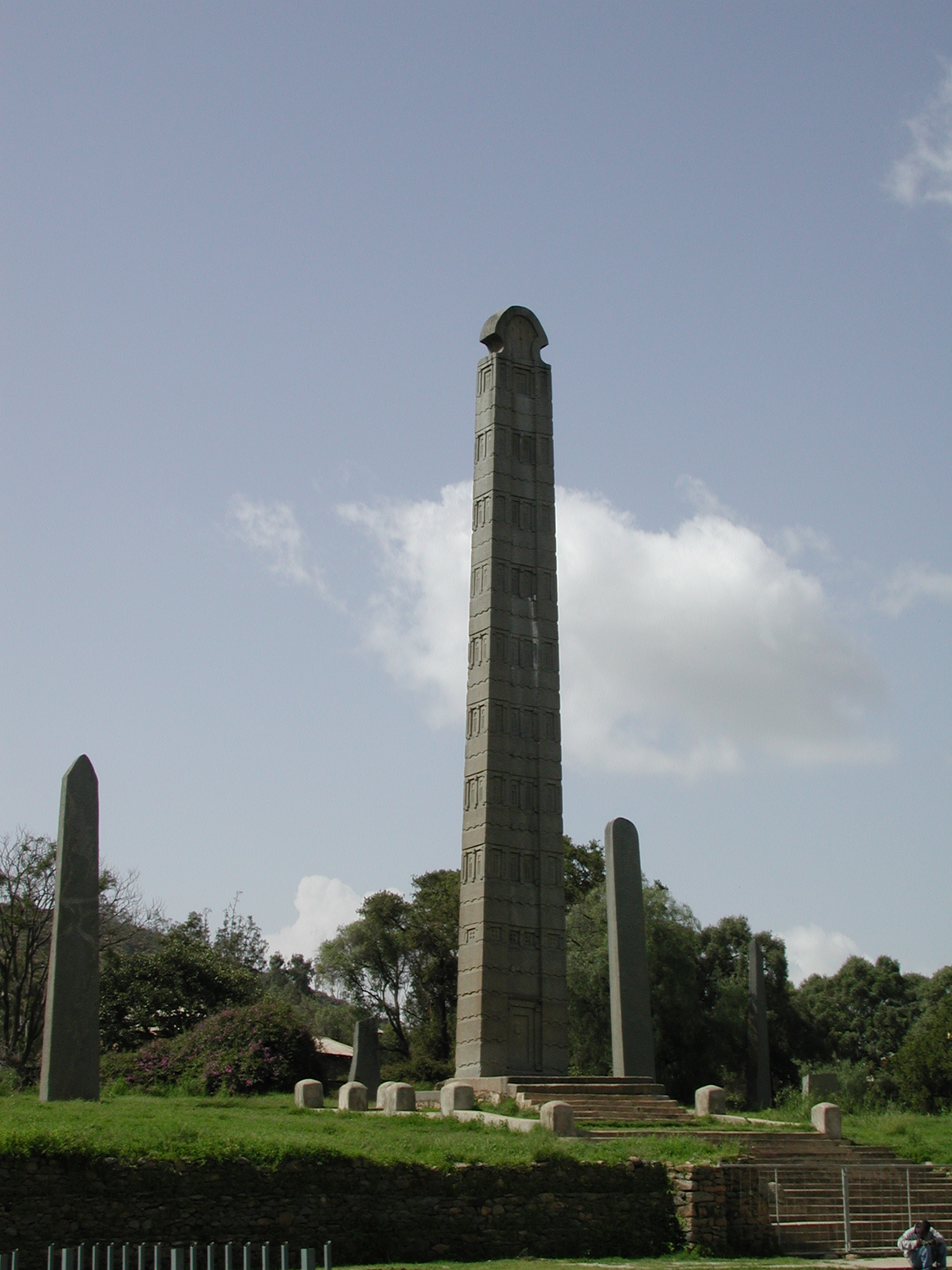
The Axum Obelisks had been looted by Italian fascists in 1937. It was returned to Ethiopia in 2005 and is now a very important landmark. It originated before the 400th century.
SHARE

By Richard Dowden*

When you say to people in Britain: “I’ve just been in Ethiopia”, they give you a look which says: “Poor you. Was it too terrible to talk about?”

That is the trouble with the modern media. Faraway places of which we know little are only shown to us when something bad happens. In the case of Ethiopia, the 1984 famine and subsequent hungers have fixed its image in the global mind. It is as if the image of the collapsing Twin Towers in 2001 typified America. But of course we have other, more positive, images of America but none of Ethiopia. So I tell them: “Ethiopia? It’s great. It’s Booming!”

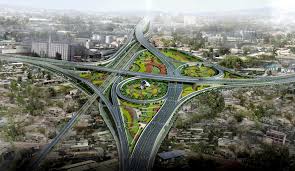
Addis Ababa is being transformed as if by monstrous engines boring through the heart of the city. A new motorway flows into town sweeping aside all before it and an urban rail system is smashing through buildings, roads, gardens – everything accompanied by cranes and trucks, noise and dust. All along its path the traditional one-storey homes of mud, wooden planks and rusted corrugated iron roofs are bulldozed into heaps and replaced by six or more stories of concrete and brick. Hammering, grinding and showers of glittering acetylene sparks proclaim the arrival of armies of Chinese workers and the rise of mighty steel and glass constructions.

The lesser building sites are full of Ethiopian workers; some newly arrived from the rural areas. Addis used to feel like a timeless city. People hung around talking or walked slowly as if on a long stroll. Now they march the streets with speed and urgency. All seem to have watches and mobile phones. Even the poor seem to have purpose. I watched one man sitting by the roadside carefully stitching the seams of his disintegrating trousers with string. For the better off the vast market quarter,Mercato, is seething with bustle and business.

Ethiopia has one rich asset that much of sub Saharan Africa has lost or never developed. It has been a state for a very long time, longer than Britain and most of Europe. Its people, language, culture are all rooted more than two thousand years ago and further back the first humans and their hominid ancestors walked here. Ethiopians’ connections to the Semitic world go back thousands or years through migration and trade. Its Coptic Christian rituals and ceremonies came from Egypt in the 3rd century A.D.

When Europe took over much of Africa at the end of the 19th century Ethiopia was already a state, capable of raising an army that defeated the invading Italians in 1896. It then made an alliance with the invading Europeans which gave it new territories. The Emperor Haile Selassie cooperated with the European powers, but in 1936 Italy seized the country. Only seven years later it was free again and, unlike its northern part, now Eritrea, never colonised. All this gives Ethiopians a special self-confidence in who they are, where they come from and where they are going.

Its recent history is also extraordinary. In 1974 Emperor Haile Selassie was overthrown by the army. But a group of Marxist students from the Tigray region at Addis Ababa University who had fought to overthrow the Emperor, saw the revolution hijacked by an army coup led by Major Mengistu Haile Mariam. Led by Meles Zenawi, these intellectuals formed the Marxist Leninist League of Tigray, left Addis and took the long march to the mountains in the far north. Linking up with their Eritrean neighbours and cousins who had already been fighting for years for their independence from Ethiopia, the Tigrayan Peoples Liberation Front started a new war against the military regime.

12 years later Mengistu fled as the TPLF and the Eritreans arrived at the gates of Addis Ababa. It was an astounding achievement, especially since they had no regional supporter. But the truth was that, for all their bravado, the TPLF leaders had not expected the Soviet Union to collapse so suddenly and with it the Mengistu regime. They may have hoped that a long struggle might nibble away and gain greater independence for Tigray. Suddenly they found they could eat the whole cake.

How could they claim legitimacy? As their army approached Addis Ababa Meles came up with a brilliant solution. The TPLF would find allies among Ethiopia’s other ethnicities and create a national umbrella body, the Ethiopian Peoples Revolutionary Democratic Front. They also created parties for Ethiopia’s other ethnic groups; the Amhara, Oromo, Somalis and ethnically mixed southerners (who were traditionally regarded as slaves). Like the Eritreans, all these ‘nationalities’ were given the constitutional right to secede from Ethiopia by referenda. In theory.

In this way Ethiopia took the opposite direction to other African countries. The rest all tried to create nationalism by suppressing ethnicity and even banning ethnic-based political parties. Ethiopia based its political system on its constituent parts. It was an extraordinary gamble. It works at the moment but of course no referenda have ever been organised or even discussed.

At the time Meles said his movement’s model was Albania. The Americans and Europeans who felt they had just engineered the total defeat of global communism, gulped. After all, Mengistu may have been a Communist but he wasn’t a looney. Then it became clear that this model simply meant that, like Albania, the TPLF was independent socialist, not aligned to Moscow or Beijing. It was not at all committed to the economic policies of Enver Hoxa.

Like any good socialist who wins the jackpot, Meles Zenawi was not going to squander his winnings. While the state retained close control over land, the economy and key state-owned companies, Ethiopia was to allow capitalism to flourish and have the best of both worlds. Key sectors are state-controlled but the buccaneer capitalists are given free rein.

With the Soviet Union gone, Meles engineered good relations with the United States and Europe. When he and Isias Afwerke, his former ally in the revolution who became President of independent Eritrea, went to war – twice, the West backed Ethiopia. It won both rounds of the war but did not press home its victory, another counter intuitive but brilliant decision by Meles although it nearly cost him his job. The Ethiopian army wanted to carry on to Asmara and change the government there. Now the two armies face each other along the border; landlocked Ethiopia open to the world, coastal Eritrea – like its president – a reclusive, closed and difficult state.

When Meles appointed Hailemariam Desalagne, a southerner and a Protestant to boot as Deputy Prime Minister, many saw this as a token gesture to the southerners and a manoeuvre to prevent a rival emerging from one of the powerful highland ethnic groups. But when Meles died in July last year, the succession fell to Hailemariam. Although he sounds more like a technocratic civil servant than a national leader, he is beginning to consolidate his power and appoint his own people in top jobs. Ethiopians are beginning to realise the deeper meaning of his appointment.

Meles’ successor could not be another Tigrayan. Nor could it be an Amhara because Ethiopia has almost always been ruled by Amharas and the Oromo, a larger group, would be up in arms. The choice of an Oromo would upset the Amhara. A Somali? Since Ethiopia invaded Somalia in 2006 and again in 2010 and is still interfering there, that is unthinkable. In the past a southerner could no more have ruled Ethiopia than an Arab could rule in Israel. But Hailemariam, hardworking, technocratic, continuing to deliver the economic boom and not part of the traditional Ethiopian power struggle, was the perfect choice. It will work as long as the economy keeps growing at a good clip.

But make no mistake, parliamentary democracy as we in the West understand it, has no role in today’s Ethiopia. Out of the 547 elected members of the country’s lower chamber only one is from an opposition party. I met him. Girma Seifu Maru is a nice man but a lonely one. As Meles Zenawi said: “There is no connection between democracy and development”.

And whose picture hangs in every government office in Ethiopia? Not President Muluta Teshome, whose name and face few Ethiopians would recognise. Nor Prime Minister Hailemariam Desalagne. It is Meles Zenawi.

*Source African Arguments.Richard Dowden is Director of the Royal African Society and author of Africa: Altered States, Ordinary Miracles published by Portobello Books
Share This Article
LinkedIn Email Copy Link Print
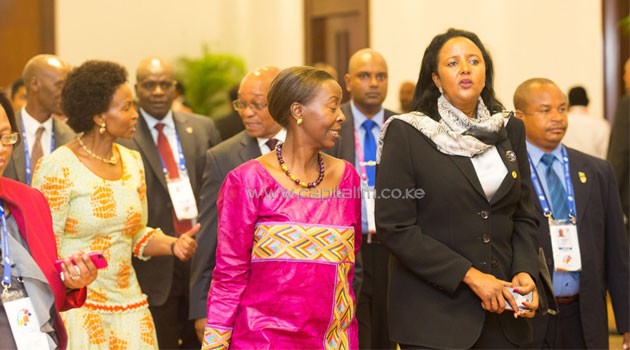
Previous Article Foreign Affair Cabinet Secretary Amina Mohamed with her Rwanda counterpart Louise Mushikiwabo arrive for the Dialogue Meeting between Coommonwealth Heads of Government and Youth Leaders at Bandaranaike Memorial International Conference Hall in Colomba, Sri Lanka. Kenya FM says ICC States to amend Statute
Next Article AfDB Board approves US120 million financing for Nairobi’s outer ring road
Leave a Comment

Leave a Reply Cancel reply

Your email address will not be published. Required fields are marked *

Your Trusted Source for Accurate and Timely Updates!

Our commitment to accuracy, impartiality, and delivering breaking news as it happens has earned us the trust of a vast audience. Stay ahead with real-time updates on the latest events, trends.
FacebookLike
XFollow
InstagramFollow
LinkedInFollow
Diestmann

You Might Also Like

AlgeriaAngolaBenin

Rwanda To Host 2023 African Women Innovation And Entrepreneurship Forum

By
Pan African Visions

Drafting a people’s manifesto

By
Pan African Visions
Dr. Toralf Haag signed the memorandum of understanding with the Angolan Minister for Energy and Water João Baptista Borges in the presence of Federal Chancellor Dr. Angela Merkel and the Angolan President João Manuel Gonçalves Lourenço
AlgeriaAngolaBenin

Voith signs memorandum of understanding to build training center in Angola

By
Pan African Visions

Nicolas Sarkozy: French ex-president says funding probe is ‘hell’

By
Pan African Visions
PAN AFRICAN VISIONS
Facebook Twitter Youtube Rss Medium

About US


Pan African Visions: Your instant connection to breaking stories and live updates. Stay informed with our real-time coverage across politics, tech, entertainment, and more. Your reliable source for 24/7 news.

  • 7614 Green Willow Court, Hyattsville, MD 20785 , USA
  • +1 24 0429 2177
  • pav@panafricanvisions.com
Top Categories
  • Politics
  • Business in Africa
  • Blog
  • Health
  • Sports
  • Entertainment
  • Multimedia
  • Contact
Usefull Links
  • PAV – Home
  • Contact Us
  • About Us
  • Complaint
  • Advertise With Us

© 2026 Pan African Visions. 
All Rights Reserved.