PAN AFRICAN VISIONSPAN AFRICAN VISIONSPAN AFRICAN VISIONS
Font ResizerAa
  • Home
  • Politics
    PoliticsShow More
    U.S. Sanctions South Sudan Officials, Firms, Over Peace Deal Obstruction and Corruption

    By Deng Machol JUBA — The United States on Tuesday imposed sanctions…

    By
    Pan African Visions
    Uganda’s Political Optics Under Spotlight at Museveni Swearing-In

    By Staff Reporter KAMPALA — Ugandan President Yoweri Museveni on Tuesday took…

    By
    Pan African Visions
    EAC Warned: Global Conflicts Pose Direct Threat to Regional Stability and Economies

    By Prosper Makene, Nairobi. The 14th EAC Armed Forces Command Post Exercise…

    By
    Pan African Visions
    Malawi Does Not Have A Mindset Problem. It Has A System Problem

    -In memory of Dr. Saulos Klaus Chilima, who started a conversation his…

    By
    Pan African Visions
    France Rethinks Its Relations With Africa Amid Strained Ties With Former Colonies

    By Jean-Pierre A. The France-Africa Summit starts today in Nairobi, Kenya, the…

    By
    Pan African Visions
  • Business
    BusinessShow More
    A Joint Growth And Resilience Agenda For Africa And Europe Could Double Bilateral Trade To $1 Trillion Over The Next Decade

    South Africa — 12 May 2026: As the global economy undergoes a fundamental…

    By
    Pan African Visions
    Ethiopian Airlines Looks Beyond 80

    By Ajong Mbapndah L * Eight decades after a modest postwar launch…

    By
    Pan African Visions
    PAPSS: The Digital Rail Rewiring African Trade

    By Ajong Mbapndah L* Africa is quietly building a new cross-border payments…

    By
    Pan African Visions
    Inside Africa’s $65B Digital Finance Boom with Zekarias Amsalu

    By Ajong Mbapndah L * Africa’s digital finance sector is entering a…

    By
    Pan African Visions
    Africa’s Fintech Second Wave Takes Shape

    By Ishmael Bangura * Africa’s fintech industry, long celebrated for pioneering mobile…

    By
    Pan African Visions
  • Health
  • Sport
    SportShow More
    Zimbabwe : FBC And Golf Community Unite Against Cancer

    By Nevison Mpofu Zimbabwe’s leading financial institution, FBC Holdings, together with the…

    By
    Pan African Visions
    Zimbabwe Open Golf Tournament 2026 Set for May 3–10 as $200,000 Championship Returns to Harare

    By Nevison Mpofu HARARE — Zimbabwe’s flagship golf tournament is set for…

    By
    Pan African Visions
    International Olympic Committee (IOC) announces Olympic champions, medallists and Olympians as Athlete Role Models for Dakar 2026

    The IOC has announced an initial list of 31 Athlete Role Models…

    By
    Pan African Visions
    Malawi’s Mighty Wanderers Head Coach Completes First Day At Queens Park Rangers

    By Samuel Ouma Bob Mpinganjira spent a full day inside QPR’s professional…

    By
    Pan African Visions
    Malawi’s Mighty Wanderers Head Coach To Begin Professional Development Placement At Queens Park Rangers

    -The ten-day attachment at the West London club begins tomorrow, Friday 17th…

    By
    Pan African Visions
  • Multimedia
    • Sports
    • Documentaries
    • Comedy
    • Music
    • Interviews
  • APO/PAV
  • AMA/PAV
    AMA/PAVShow More
    U.S. Embassy Pretoria Celebrates Mandela Day at Zola Community Health Center in Soweto

    PRETORIA, South Africa, July 22, 2019,-/African Media Agency (AMA)/- To honor Nelson Mandela’s…

    By
    Pan African Visions
    Zimbabwe: Droughts leave millions food insecure, UN food agency scales up assistance

    Severe drought has rendered more than a third of rural households in…

    By
    Pan African Visions
    Mozambique: Opposition candidate facing pre-election death threats and intimidation

    GENEVA, Switzerland, July 19, 2019,-/African Media Agency (AMA)/- The main opposition candidate in…

    By
    Pan African Visions
    The END Fund – Making everyday a Mandela Day

    JOHANNESBURG, South Africa, July 18th 2019,-/African Media Agency/- 2018 was a true landmark…

    By
    Pan African Visions
    Innovation leaders gather in Nairobi to unpack Intelligent Enterprise opportunities at SAP Innovation Day.

    NAIROBI, Kenya , July 18, 2019 -/African Media Agency (AMA)/- About 600…

    By
    Pan African Visions
  • Media OutReach
    Media OutReachShow More
    World’s First Lightweight High Resolution High Precision CO₂ and CH₄ Point Source Detector “MUSICO” Arrives at Tiangong Space Station via Tianzhou-10

    HKUST Led Project Marks Hong Kong’s First Scientific Payload on the National…

    By
    Pan African Visions
    Masterise Group Launches One Central Saigon

    Vietnam’s First Mixed-Use Landmark DestinationSet opposite Ben Thanh Market, One Central Saigon…

    By
    Pan African Visions
    Bora Navigates A Transitional 1Q26 And Sets A Strong Foundation For Rest Of The Year

    Transformational Acquisitions Expected to Contribute to Long Term Growth Starting 2Q26HONG KONG…

    By
    Pan African Visions
    Esperanza Partners with One Cool Stage to Open New Financing Frontiers for Hong Kong’s Cultural Assets Esperanza

    Hong Kong theatre IP “The Big Big Day” anchors the next phase…

    By
    Pan African Visions
    LGT appoints CEO for its wealth management business in Thailand

    BANGKOK, THAILAND - Media OutReach Newswire - 13 May 2026 - LGT…

    By
    Pan African Visions
  • Blogs
    • African Show Biz
    • Insights Africa
    • Cumaland Diary
    • Kamer Blues
    • Nigerian Round Up
    • Ugandan Titbits
    • African View Points
    • Global Africa
  • Magazines
Search
  • Global Africa
  • Interviews
  • Politics
  • Sports
  • African Newsmakers
  • African View Points
  • Development
  • Discoveries
  • Education
© 2026. Pan African Visions. All Rights Reserved.
Reading: Where does aid money really go — and what is it spent on?
Font ResizerAa
PAN AFRICAN VISIONSPAN AFRICAN VISIONS
  • Politics
  • Business in Africa
  • Blog
  • Health
  • Sports
  • Entertainment
  • Multimedia
  • Contact
Search
  • Home
  • Politics
  • Business
  • Health
  • Sport
  • Multimedia
    • Sports
    • Documentaries
    • Comedy
    • Music
    • Interviews
  • APO/PAV
  • AMA/PAV
  • Media OutReach
  • Blogs
    • African Show Biz
    • Insights Africa
    • Cumaland Diary
    • Kamer Blues
    • Nigerian Round Up
    • Ugandan Titbits
    • African View Points
    • Global Africa
  • Magazines
Have an existing account? Sign In
Follow US
© 2025 Pan African Visions.  All Rights Reserved.
PAN AFRICAN VISIONS > Blog > Uncategorized > Where does aid money really go — and what is it spent on?
Uncategorized

Where does aid money really go — and what is it spent on?

Last updated: November 1, 2013 12:37 am
Pan African Visions
Share
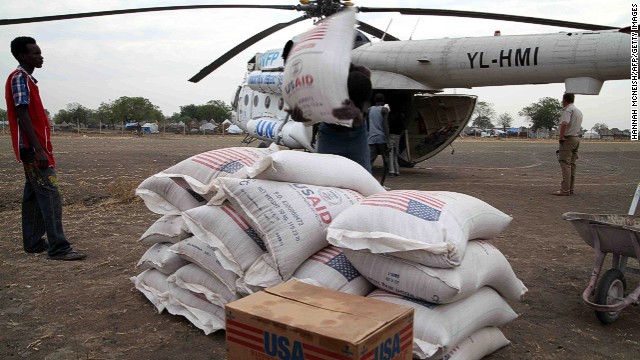
People in Jonglei state, South Sudan, unload aid from the U.N. World Food Program in January 2012
SHARE

By Charles Lwanga Ntale*


People in Jonglei state, South Sudan, unload aid from the U.N. World Food Program in January 2012

What is the value and impact of international aid? In an era of global austerity, this is a question that is frequently posed by policymakers and the citizens they represent.

The truth is, it is actually quite hard to measure. But there are important questions about both the quantity and quality of aid that must be answered.

Contrary to popular perception, aid is not one homogenous entity or a single transfer of money from donor to recipient countries. The term “international aid” actually covers a wide variety of things, including food and commodities, advice and training, and debt relief.

In 2011 — the last year we have comprehensive data for — total development aid from rich countries stood at nearly $150 billion, according to the Investments to End Poverty report. Only $59 billion identifiably involves the transfer of actual cash to, for example, recipient governments, NGOs operating on the ground or special project funds.

Aid in kind makes up another $25 billion. Most of this is food aid, which is used to tackle acute hunger — but even this form of aid is not without controversy. Many donors avoid shipping actual food to developing countries, aware that it destroys local markets and harms local farmers.

Research demonstrates that food aid can be poor value for money, especially when food grown in donor countries is shipped to the developing world. Sorghum shipped from the United States is 200% more expensive than it is in Chad and almost 100% more than in Sudan, according to Development Initiatives calculations. Despite this, the United States and Japan continue to make extensive use of food shipments.

Perhaps even more surprising is the fact that large amounts of aid money never actually leave rich countries.

As much as $22 billion — or 20% of bilateral aid spending — is spent on activities in donor countries or put towards the cancellation of debt. This includes funds to cover housing, food and other services for the first 12 months of refugees’ stay in the donor country. It also includes public spending on universities to cover the costs for students from developing countries. In 2011, $4.5 billion was spent on refugee costs, $3.5 billion on university costs and around $7.5 billion on debt relief.

As important as these expenditures may be, they do not result in any transfer of resources to developing nations. These schemes may of course be beneficial to recipient countries in the long term — for example, contributing to capacity development if students return to their countries. But it is undeniable that these schemes are at odds with the common perception of aid as financial support transferred from donor to recipient countries to fight poverty.

These different elements of aid obviously have very different effects on economic development and growth. A dollar of cash will have a very different impact to a dollar’s worth of food or a dollar’s worth of a consultant’s time. It is difficult to understand just how bundling all of these items into one lump sum can allow us to draw meaningful and reliable conclusions about the value of aid.

People in Jonglei state, South Sudan, unload aid from the U.N. World Food Program in January 2012

This lack of clarity was part of the motivation for Investments to End Poverty — a major new report that analyzes aid in all of its complexity. At Development Initiatives we reviewed each individual record of foreign aid from OECD donors over the period 2006-2011 — over a million rows of data. Now, for the first time ever, we can see just how much aid flows between specific countries and, crucially, what that aid consists of.

The results are striking. For example, according to our calculations, Italy and Denmark both gave very similar levels of bilateral aid, just above $2 billion, in 2011. But almost 70% of Italy’s aid stayed in the country, spent on refugee costs and debt relief, whereas around 70% of Denmark’s aid resulted in a transfer of resources to developing countries.

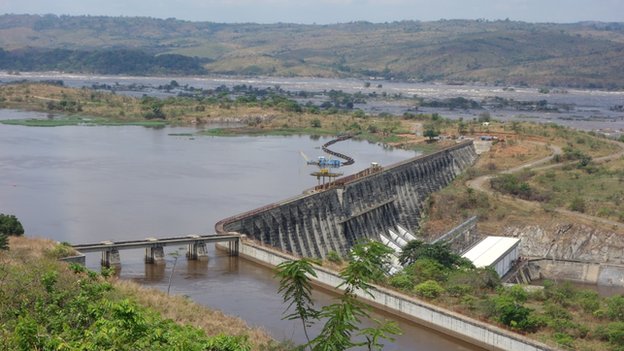
On the recipient side, some countries that appear to receive considerable funds in fact receive a lot less than advertised. Our research found that of the $7.5 billion in aid reported as given to the Democratic Republic of Congo in 2011, more than $5 billion was not transferred to that country, and consisted instead of debt relief.

All of this matters because we are at a crossroads in international development. In the last few decades, we have seen unprecedented progress in alleviating poverty, as recognised by world leaders meeting at the United Nations General Assembly in New York in September. There is a growing consensus that we can end extreme poverty by 2030.

The truth is that we cannot meet this goal without international aid. While FDI and remittances undoubtedly contribute to economic growth in developing countries, aid is the only international resource flow which can be targeted explicitly to improve the lives of the poorest people around the world.

In sub-Saharan Africa alone, 400 million people live in extreme poverty and require interventions that are targeted and complementary to existing support to lift them out of it. Without the support of international aid, most poor people will be left behind.

If we want to maximize the impact and reach of international aid, we need to ensure that every dollar is spent as efficiently as possible. We can only do this with better information and a clear understanding. Then policymakers in both donor and recipient countries can make better and more informed decisions, and civil society can better monitor progress and hold them to account.

*Source CNN
Share This Article
LinkedIn Email Copy Link Print
Previous Article HEADS OF STATE PUSH FOR STRONG ICT GROWTH
Next Article IrokoTV has thousands of films made in Nollywood, Nigeria's movie industry, in its catalogue Video on demand poised to change how Africa watches
Leave a Comment

Leave a Reply Cancel reply

Your email address will not be published. Required fields are marked *

Your Trusted Source for Accurate and Timely Updates!

Our commitment to accuracy, impartiality, and delivering breaking news as it happens has earned us the trust of a vast audience. Stay ahead with real-time updates on the latest events, trends.
FacebookLike
XFollow
InstagramFollow
LinkedInFollow
Diestmann

You Might Also Like

Latest News January 20, 2016

By
Pan African Visions

Senegalese women’s message to the world

By
Pan African Visions

Will new agreement to protect marine life be a success?

By
Pan African Visions

Launch of the AFRICA CEO FORUM 2016

By
Pan African Visions
PAN AFRICAN VISIONS
Facebook Twitter Youtube Rss Medium

About US


Pan African Visions: Your instant connection to breaking stories and live updates. Stay informed with our real-time coverage across politics, tech, entertainment, and more. Your reliable source for 24/7 news.

  • 7614 Green Willow Court, Hyattsville, MD 20785 , USA
  • +1 24 0429 2177
  • pav@panafricanvisions.com
Top Categories
  • Politics
  • Business in Africa
  • Blog
  • Health
  • Sports
  • Entertainment
  • Multimedia
  • Contact
Usefull Links
  • PAV – Home
  • Contact Us
  • About Us
  • Complaint
  • Advertise With Us

© 2026 Pan African Visions. 
All Rights Reserved.