THE CONVICTION OF CHARLES TAYLOR: THE SHAME OF AFRICA.
May 12, 2012
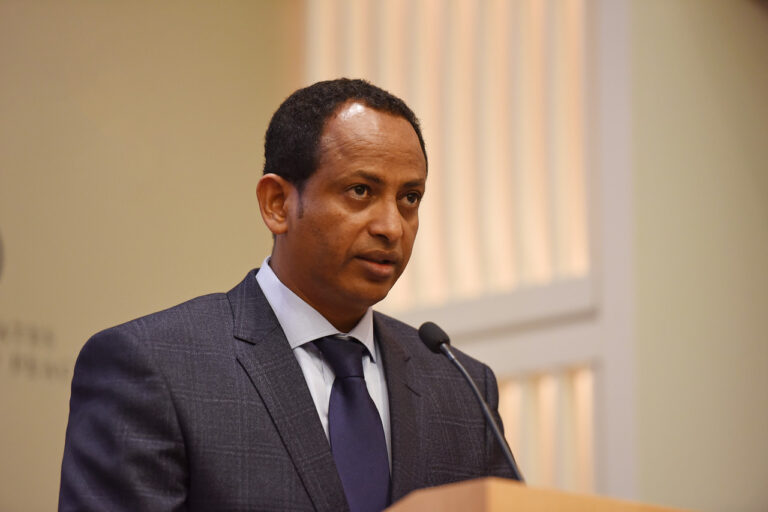
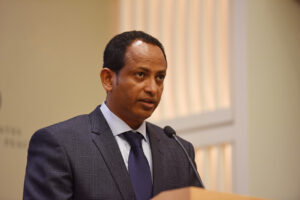
By Chief Charles. A. Taku* Writing in the Virginia Journal of International Law, (volume 48-Number 3-Spring 2008 at page 543) Professor Iontcheva Turner stated that “the legal and political conceptions of international criminal trials are ideal types. To some degree, all law is political….. Even at trials which are not exclusively political, there are instances in which political and adjudicative purposes clash and one must be prioritized above the other”. This statement of fact aptly [caption id="attachment_609" align="alignleft" width="103"] Chief Taku questions the ICC's approach towards Africa[/caption] describes the humiliating choices that inform the disproportionate focus of International Tribunals and Courts on Africa. The just concluded trial and conviction of Charles Ghankay Taylor falls squarely within this perspective. Charles Ghankay Taylor was arrested in Nigeria on the 29 March 2006 and transferred to the Special Court for Sierra Leone. He made his initial appearance on the 3rd of April 2012. I was the first lawyer that Professor Vincent Nmehielle the then Principal Defender at the Special Court contacted to act as his duty counsel during his initial appearance. It was not possible for me to play that role because I was then the lead counsel for Major Morris Kallon. Morris Kallon was the indicted deputy leader of the Revolutionary United Front for Sierra Leone (RUF) who against the overwhelming opinion of most of the RUF combatants, accepted on the recommendation of regional ECOWAS leaders, to join Issa Sesay the interim leader of the Movement on the incarceration of Foday Sankoh to sign the Lome Peace Accord. It is significant to note that the RUF was never defeated in the battle field after ten years of combat pitting them with a combined force of ECOMOG, UNAMSIL, Soldiers of the Sierra Leone Army, and Executive Outcomes Mercenaries from South Africa, the ULIMO rebel forces from Liberia and substantial Military support from Britain. It is also significant to note that the Sierra Leone war was brought to an end through substantial co-operation from Charles Taylor who on becoming the President of Liberia convinced the RUF to lay down arms and embrace the peace process. It was therefore, through the courage and good will of Charles Taylor, Morris Kallon and Isa Sesay that the Lome Peace Accord was negotiated and signed. That accord reserved the position of Vice President of Sierra Leone for Foday Sankoh the RUF leader and all the combatants who took part in the conflict were granted a general amnesty. A series of betrayals by the UN Personal Representative, President Tejan Kabbah and some regional leaders like President Obasanjo of Nigeria, prevented the amnesty clauses in the Lome Peace Accord as well as the positions reserved for Foday Sankoh and the RUF from been implemented. This treacherous position was endorsed by the Special Court for Sierra Leone; a hybrid International Court whose mandate was to bring justice and reconciliation to Sierra Leone. Because of this, the execution of its mandate is adjudged by many observers to be mitigated. There can therefore, be no gainsaying that the trial and conviction of Charles Taylor like that of Isa Sesay and Morris Kallon , architects of the Lome Peace Accord that brought peace and stability in Sierra Leone and the sub region in total disregard of the Lome Peace Accord and the amnesty it granted is an act of betrayal that justifies the criticism often made, that the exercise of international justice on the African continent against Africans has other motivations that are inconsistent with the interests of the people it purports to serve. It is further safe to state that the setting up of the Special Court for Sierra Leone and the trial and conviction of Charles Taylor like that of Morris Kallon and Isa Sesay does not contribute to peace and security in the sub region. Rather, it is the combined effect of the implementation of the amnesty clause in the Lome Peace Accord at national level by both President Tejan Kabbah shortly before the General elections when it was obvious to him that his chosen candidate Solomon Barewa ( Solo B) of the Sierra Leone Peoples, Party ( SLPP) was about to lose and President Alex Koromah shortly on assuming office in releasing from Pendemba Road Maximum Security Prison thousands of combatants that brought peace to Sierra Leone. The integration of some these combatants into the National Army and Police and the implementation of the recommendation of the widely acclaimed Peace and Reconciliation Commission that was organized after the war, helped in no small way in the national healing that brought peace to the country. The Special Court for Sierra Leone despite these convictions remains largely unpopular among a large component of the Sierra Leonean population who are alarmed about the colossal sums deployed to secure the conviction of persons they perceived as bringing about the peace and stability they enjoy. Added to their disillusionment is the fact that Chief Hinga Norman the widely revered former Vice Minister of Defence who fought tenaciously against the rebels when President Tejan Kabbah fled to Guinea and Foday Sankoh whose ideology in “Foot Paths to [caption id="attachment_613" align="alignright" width="150"] Wrong signals are sent when accords signed are not respected argues Chief Taku[/caption] Democracy” remained popular among the rural and urban poor and students died in prison in circumstances which they can never totally come to terms with. For a majority of Sierra Leoneans, the amount of money spent in conducting these trials should have been used to solve the myriad of development problems that the country is facing as well as to alleviate the pain and suffering of the victims of the unfortunate conflict, most of who still live in abject penury. The conviction of Charles Taylor for the alleged assistance provided to the RUF for Sierra Leone ignores the fact that the indictment against the leaders of the RUF alleged that they received assistance from a number of regional leaders each with a personal agenda in fueling the conflict that had little or nothing to do with diamonds as alleged in the indictments and found in the judgment. These included Blaise Campaore of Burkina Faso and Colonel Khadafi of Lybia. In this regard, it is informative to know that several conflicts that have afflicted the sub region and beyond were largely inspired by the Liberian and Sierra Leonean conflicts. In the Ivory Coast, some of the combatants that fought or who are fighting in those conflicts were trained or took part in these conflicts. In the above regard, one can safely state that the ghost of the Sierra Leonean war and the traitorous arrest, indictment and trial of Charles Taylor and the RUF leaders despite the Lome Peace Accord significantly influenced the tactical and strategic decisions that Alasane Ouatarra and Blaise Campoare made during the proxy war to control the soul of Cote D’Ivoire. This was largely responsible for the fact that no peace accord between the belligerents would have worked as they preferred to fight and win at all costs; even it meant mortgaging the sovereignty of the country for that purpose. For them and many more in the continent pointing to the Lome Peace Accord, they surmised that it is a pure waste of precious time to rely on Peace Accords which may not be worth the pieces 0f paper on which they are written and signed. The trial of Charles Taylor like several ones pending before the ICC was not intended to be in the interest of Africa; let alone Sierra Leone. A primary focus of the initial investigation that led to the creation of the Special Court conducted by the US Federal Bureau of Investigation (FBI) had nothing to do about diamonds or war crimes. Like the case of Saddam Hussien, in which US intervention was largely informed by reliance on forgeries concocted by an exiled political opponent, the initial investigations into the Sierra Leonean Case were initiated based on false information provided to the US authorities that Morris Kallon, Isa Sesay and Charles Taylor had links to Al Qaida which was alleged to have assisted them in their war efforts. When the investigations found no such links, a justification for the investigations had to be found, hence the creation of the Special Court to try these individuals, their role and contribution in the peace process notwithstanding. The trial and conviction of Charles Taylor has been hailed by supporters of the International Criminal Court and boasted its focus on Africa. Although it deprives Moreno Ocampo the ICC Prosecutor the lime light in his selective crusade to focus prosecutions entirely on the African continent in ways which wrongly portray the continent as the reservoir of international criminality, it has nevertheless provided justification for such humiliating spotlight on this troubled continent. But the trial and conviction of Charles Taylor comes at a price to international justice in particular and international law in general. A close study of the judgments delivered by the Special Court in the four trials that that it [caption id="attachment_618" align="alignright" width="150"] Gbagbo left is indicted by the ICC, what about Ouattara and leaders of the rebellion in Ivory Coast?ICC's selective justice at work many think[/caption] conducted, portray a failed attempt to develop and fit the facts and the law into varying legal principles and jurisprudence developed in other International Tribunals in the most unprincipled and incoherent manners imaginable. For example, the most ridiculous extension by the Special Court on the RUF of the basic form of criminal liability of Joint Criminal Enterprise introduced into International Criminal Law as a form of individual criminal responsibility in the Tadic Case at the ICTY in which criminal intent ( the mens rea) was no longer found to be an element of individual criminal responsibility was ignored or abandoned in the Taylor Judgment, although the pleadings, the facts, the law and forms of criminal liability were very similar. Taylor thus was convicted on secondary forms of criminal liability, namely aiding and abating making its ridiculous for anyone to request and impose a sentence against him that surpassed that inflicted on primary perpetrators. In Liberia, the prospects of the conviction of Charles Taylor must have played a role in President Ellen Sirleaf denting the democratic profile she brought to office in resorting to autocratic methods of retaining power in the last election. Her complicity in rendering nugatory the accords that saw Taylor leave power for Nigeria in acceding to pressure from the United States to request Nigeria to hand Charles Taylor to be prosecuted may again lead her to [caption id="attachment_615" align="alignleft" width="150"] Down but is he out? mix feelings in Africa about the verdict on Charles Taylor[/caption] attempt to influence the poll at the end of her mandate to favour a candidate who will provide her the type of protection that will shield her from Prosecution for the support she admitted providing Charles Taylor during the guerrilla war he waged inside Liberia and then betraying him thereafter. In this regard, the reasons for which she requested a trial in The Hague far from Liberia may not be wished away with the conviction and possible imprisonment of Charles Taylor in England. To her surprise and that of many others, Charles Taylor may continue to influence the politics and policy of Africa, the sub region and Liberia on International Justice for a very long time to come. Considered separately or in aggregate, far from mobilizing African people and governments and to support international justice, in particular justice at the International Criminal Court where two African Heads of State and prominent political leaders are perceived to have been selectively indicted, the conviction of Charles Taylor will rather radicalize opposition to the ICC. In Kenya, for example, the ICC Prosecutor Moreno Ocampo has been criticized by a significant segment of the population for carrying out a shoddy investigation with a political dent. Many accuse him of acting as if Kenya has surrendered its sovereignty to the ICC and that the entire process has been politicized. It is due to the destabilizing effect of the ICC process and the abrasive approach of its Chief Prosecutor towards the investigations and statements made by him concerning matters of national sovereignty in Kenya and its potential for destabilizing a major African Nation at war in a volatile sub region that has motivated the East African Community Heads of State to follow on the heels of the African Union in urging that the treaty of the East Africa Community be revised to give the East Africa Court of Justice, criminal jurisdiction to try the Kenya Case rather than the ICC. The African Union has expressed its radical opposition to the indictment of President Bashir at the ICC and most of its members have publicly declared that they will not co-operate with the ICC in executing its warrant against the Sudanese President. Uganda on its part took the same position on the arrest and handing over of its citizens, including Joseph Kony of the Lord’s Resistance Army to the ICC preferring to try them at a Special Division of the High Court of Uganda established for that purpose. The ICC has so far adopted an inconsistent and unprincipled position in respect of the principle of complementarity enshrined in article 17 of its Statute in favour of the State Parties in whose territory crimes within the jurisdiction of the Court might have been perpetrated. In the case of Libya which neither has an effective government nor a functional judicial system, Mr. Ocampo supported by the super powers and NATO member states that might have perpetrated war crimes and crimes against humanity in the executing of the so-called responsibility to protect mandate of the Security Council has all long been willing to apply the principle of complementarity in favour of the so-called National Council of Lybia to investigate and prosecute alleged crimes perpetrated in its territory, in particular the trial of Seif Islam who is still in the custody of tribal forces. Given that the so-called National Council and the intervening states bear the greatest responsibility for international crimes perpetrated by rebels who were under their mandate, to defer to National Council for Lybia to investigate these alleged crimes is like asking it to investigate itself and its accomplices and criminal bands under its effective command. The murder of Khadafi and alleged Black African Mercenaries allegedly perpetrated by rebel forces under the command of the National Council and Tribal Militias deserve to be investigated and prosecuted by the ICC if it still has a modicum of respect and independence after all prisoners of war are in the hands enemy power, but not of individual or military units who captured them. It is trite law, that irrespective of the individual responsibilities that may exist, the Detaining Power is responsible for the treatment given them. This principle of international law is applicable to Libya and Ivory Coast where the French Army and the so-called Patriotic Forces allied to Alassane Ouattara were proximate to and conducted armed combat in areas in which alleged rebel units close to them perpetrated egregious violations and international crimes against soldiers hors de combat, a civilian population or civilians not taking part in the armed conflict. However, but for the orders handed down by the Pre-trial Chamber, the Chief Prosecutor evinced every effort to limit his investigation of the Ivorian Case to the arrest, humiliation and indictment of President Gbagbo and the potential indictment of his wife and people close to him while sparing Alasane Ouatarra, the Warlord Soro and others who perpetrated crimes against humanity on a wide and systematic scale in the North and areas of Abidjan and acts of documented Genocide in the West. In the Kenyan Case, supported by the USA and Britain, the Chief Prosecutor of the ICC has persistently taken the position that Kenya does not have a functional judiciary capable of trying the four Kenyans against whom charges were confirmed and they committed to trial. Paradoxically, the US and Great Britain have consistently called on Kenya to try pirates who have rendered international sea navigation in the Indian Ocean almost impossible although these are international crimes as well. This unprincipled position towards the same country and its judicial and political institutions can only be motivated by political motives. And these political motives cannot be in the best interest of the country concerned. Under the ICC statute, the Office of the Prosecutor is supposed to act independently in conducting investigations. That independence has so far not been demonstrated in the selective manner in which the Prosecutor has focused on Africa since the ICC was created. The ICC has conducted preliminary investigations on cases in Palestine, Sri Lanka, Latin America, Europe and Asia but has been shy to even submit application [caption id="attachment_620" align="alignleft" width="150"] Few in Africa may miss Moreno Ocampo as Prosecutor of the ICC[/caption] before the Pre-trial Chamber for permission to investigate. In the case of Libya, Ivory Coast, Uganda, Kenya and the Democratic Republic of Congo, based essentially on human reports and information obtained through intermediaries .He filed applications to intervene in these African Internal Conflicts because it was convenient for him to do or because it served the interests of super powers as critics have alleged. Interestingly, he has evinced little efforts to debunk his critics and rather persists in perpetuating the selective potentially destabilizing involvement in African internal conflicts. This conduct has given the ICC and international justice a bad name and reputation on a continent which otherwise overwhelmingly supported the creation of this court and desperately needs it in its fights against impunity which for half a century has provided neo-colonial dictatorial agents the ammunition to perpetrate their rule on the blood of the impoverish masses of this troubled continent. Africa therefore deserves an International system of justice that is just, equitable, credible and not the tools of neo-colonial imposition that presently passes for International Criminal Courts. For these reasons, a judgment rendered against Charles Taylor which should have been hailed throughout the continent is regrettably seen from the above perspective and this is a setback in the desired fight against impunity and thus very sad indeed. * Chief Charles A. Taku, a Traditional Ruler and Advocate of the Supreme Court of Cameroon, is a Counsel at the ICC and a Lead Counsel at the UNICTR, and at the Special Court for Sierra Leone