‘The more you sweat in peace, the less you bleed in war” Norman Schwarzkopf
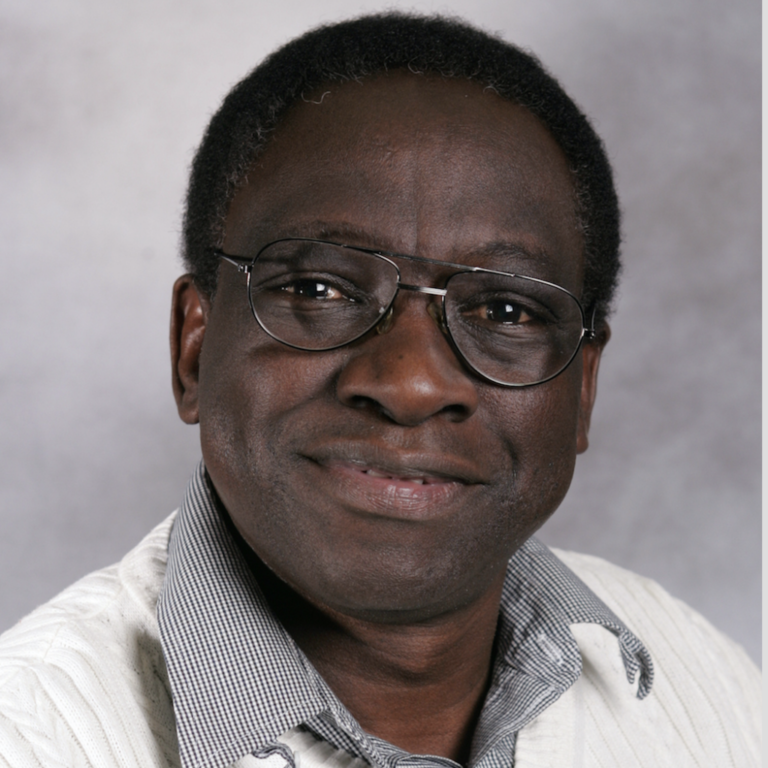
By Mwalimu George Ngwane*
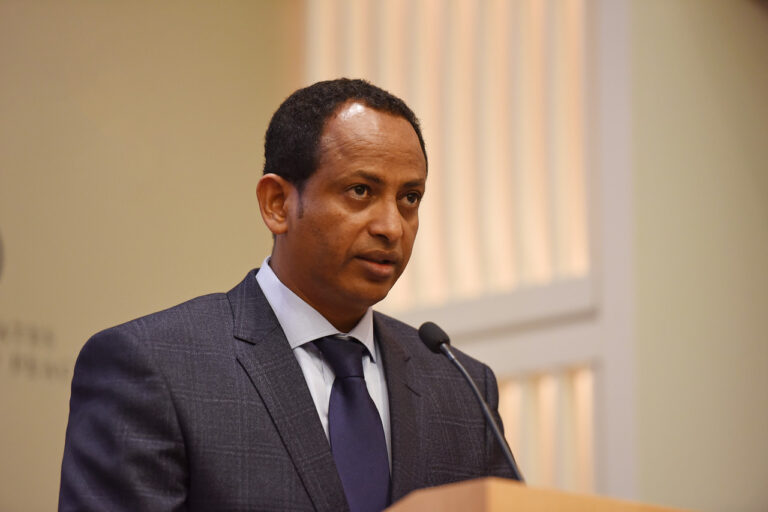
None else but the government can take the initiative of a constitutional dialogue and if it does the participants must be willing to comply and cooperate, says Mwalimu Ngwane
On September 10, 2019, the Head of State, President Paul Biya in a message to the nation convened a Major National Dialogue to address the crisis in the South West and North West regions. A crisis to quote him ‘that not only jeopardize the safety and wellbeing of the population living there but also far-reaching consequences for the national community as a whole’. President Biya continued ‘the entire national community has hopes that this will be an opportunity for our brothers and sisters in the North West and South West regions toclosethisparticularlypainfulchapter, toforgettheirsufferingandtoreturntonormallife’. In his opening speech at the Major National Dialogue Prime Minister Dion Ngute challenged the attendants to ‘make history and find solutions to the problems that have separated us physically and intellectually in recent years”.
Two years after the Major National dialogue we have, as a people, reaped the psychological satisfaction that goes with talking with each other, mitigated the cacophony of violent extremism in the North West and South West regions, shown resilience in the adage that the greater the ability to handle adversity, the stronger the partnership that develops; and benefited from some institutional and structural reforms. But we are still ‘to close this particularly painful chapter, to forget their suffering and to return to normal life’. This can be understood. Dialogue is a process and not an event. Peace talks are a permanent feature in the landscape of conflict and as long as the war-war rages on, the jaw-jaw must forge ahead.
Some of the indicators that show that normalcy has not completely returned to the two regions are the proliferation of arms in the hands of non-state armed actors, the armed confrontation between the military and non-state armed actors with innocent civilians being caught in the crossfire, the presence of the military in towns, roadblocks, arson, the timid return of schools in some rural and semi-urban areas, the religious loyalty to civil disobedience every Monday, and the presence of Internally displaced persons as well as refugees.
As far as non-state armed belligerents are concerned, I can categorise them into three groups –the Haram forces which have mainly financial/economic interest through kidnappings, gruesome murder, and ransom request; the Hydra forces which have an ideological interest through their quest for self-determination which sometimes vacillates between secession, confederation and federalism; and the Hybrid forces whose pendulum of interest swings between the first two.
After the 2019 Major National Dialogue, there have been calls for more dialogue, something which the Head of State mentioned during his 10 September 2019 as he said ‘since the outbreak of the crisis in the North West and South West regions, the term dialogue has never been so much talked about, used and even misused’. But were the principle of another dialogue (Dialogue 2) accepted, would it be just another format of the 2019 Major National Dialogue? I am not sure. Even if the Major National Dialogue provided a relative vista for frankness, sincerity and orientation to restoring sanity and normalcy to the fractured and fissured cohesion of the people living in the South West and North West regions, it cannot be seen as an end by itself but as an entry point into a journey, sometimes long, of conflict transformation. So before venturing into a ‘more of the same ‘dialogue format, it may be necessary to evaluate the gains and gaps made during the Major National Dialogue. In his 1st August 1964 Memorandum, Bernard Fonlon declared that ‘a traveler on the road stops from time to time to look back and see the ground he has covered; merchants close shops at intervals to take stock; and users of machines are bound to service and overhaul them now and again’. Therefore, going forward I propose four models of dialogue that can be implemented simultaneously or sequentially.
For many analysts, the persistence of the crisis in the North West and South West of Cameroon is an indication that the Major National was not the panacea expected
Community dialogue: the amicable
While the Hydra and Hybrid forces can be brought to the dialogue table, the Haram forces can either be confronted by the state armed actors or converted by community stakeholders. Community stakeholders include traditional, religious, security, administrative, education, youth, women, community media, and civil society groups which in their respective neighborhoods have an advocacy interest in transforming their immediate environments from conflict-prone to conflict-proof. In this vein the community creates Local Peacemaking Committees (LPC) which engage especially the Haram Forces to drop their arms as well as incentivize them with reintegration tools of development. This is what Prophet Isaiah referred to as beating swords into ploughshares. A community dialogue is a peaceful, proximity, palaver tradition that according to Dr. Dze-Ngwa Willibroad encourages community empathy, accommodation, healing, atonement and reintegration into society. Even the military are not left out as community stakeholders because as Dze-Ngwa suggests they can hold back their guns and harness or tap from their innate vocational skills (carpentry, building, engineering, medicine, teaching, sports etc) to promote community development. Local or Citizen Peacemaking is called Track1 approach as opposed to Track 11 approach carried out by the state. Community dialogue believes in promoting the culture of peace in the neighborhood through an indigenous knowledge system. As in all traditional African societies, there exists a wealth of indigenous knowledge, norms, skills and practices which are relevant to establishing and maintaining peaceful relationships between individuals and groups to deal with differences and disputes. Like the ujamaa ideology of Tanzania, the gacaca practice in Rwanda and the ubuntu philosophy in South Africa, community dialogue is a homegrown, participative, bottom up, truth and reconciliatory therapy that seeks to provide an enabling environment for renewed collective catharsis, revived economic sharing, repaired broken bonding, and restored confidence and trust within the community. However, it must be noted that community dialogue is relevant to cessation of hostilities and agreement on mutual security but does not resolve the root cause of the conflict. As a local ownership instrument, community dialogue is only important in demonstrating that grievances can be resolved without anyone resorting to gun violence.
Special Status Dialogue: The Available
The Special status is the most visible and much talked about outcome of the Major National dialogue. Created by law No. 2019/024 of 24 December 2019 of the bill to institute the General Code of Regional and Local Authorities, the Special Status of the North West and South West regions constitutes Part V of Book IV containing the operational Rules applicable to the two regions. The content of the Status has been lauded by some because it is ‘a specific organizational and operational regime, based on the historical, social and cultural values of these regions, with due respect for the primacy of the state and national unity and solidarity (Section 327.2). In his credit to the content of the Status, the President of the Foundation for the Advancement of Regional Autonomy in Cameroon and policy Advocacy scholar, Azong-Wara Andrew writes ‘there are merits in the Special Status which some of our Anglophone compatriots are tending to brush under the carpet for lack of content’ (The Horizon newspaper, 12 August 2021,p.10). Meanwhile a frontline actor for Federalism Dr. Simon Munzu argues that the provisions of the Special Status do not contain anything that confers any meaningful ‘Special Status on the two Anglophone regions. It is hard to see how they can lead to the resolution of the Anglophone problem” (The Sun newspaper, 5 June 2020). Indeed, there have been diametrically polarized opinions on the present content of the status. Having a further discussion on it could be helpful. The format would simply be for the members of each Regional Assembly to take another critical and non-political partisan look at the Status so as to expand its administrative space and deepen its ideological content. A content that reflects the universal concept of Special Status regimes yet one that is contextualized to suit each Regional specificity and at the same time to embrace the overarching values of Education, Judiciary,Public Administration, Language policy etc. between the two regions.
Caucus dialogue: the attainable
In this message of 10 September 2019, President Paul Biya asked ‘Talking about dialogue per se, the issue has always been, with whom? ‘ He continues “New Information and Communication technologies, especially social media networks have unfortunately facilitated the advent of self-proclaimed leaders, extremists of all shades trying to achieve recognition using insult, threat, hate speech, violence and murder”.
Two years later we now know those toiling for peace and those spoiling for war. It is now possible to separate the oranges from the grapes among the interlocutors. There are credible interlocutors or stakeholders in the domestic and diaspora scenes who can constitute themselves as caucuses to identify the problem of the conflict and draft a peace framework to resolving it. Some of the caucuses that can be considered include Delegates that can be elected from each of the two regions, Delegates as an Anglophone bloc, Delegates from the various groups in the diaspora, Delegates from some of the Affirmative Action groups that are looking for peaceful means in ending the crisis, the clergy, traditional leaders, youth groups, women groups, rights-based groups etc. What this requires is that such caucuses be given an opportunity to hold their internal discussion meetings and come out with their blueprint or white paper for peace. It may be necessary that these caucuses with concrete agendas be invited to a multistakeholder conference to exchange views and find common ground towards a Comprehensive Peace Agreement.
Again, in Paul Biya’s own words on 10 September 2019 ‘Prior to the effective holding of the dialogue, the Prime Minister, Head of Government will carry out broad based consultations to solicit a wide range of views that will serve as a source of inspiration for the conduct of deliberations”. The need to use the pyramid caucus approach which is broad at the bottom and narrow at the apex would permit Delegates to address the core and substantive root causes of the Anglophone problem that has morphed into the crisis in the two regions. Our country is host to persons who can generate public pressure for the parties to listen to the people’s aspiration for peace and who can formulate a long-term agenda for restorative justice, positive peace and harmonious co-existence in Cameroon.
The caucus dialogue that moves from the micro to the macro level, believes in fixed goal but flexible method; it believes in unity of outcome but not uniformity in discussion; it believes in deep conversation based on rational thinking but not on erratic impulses and finally it believes in the protection of our bonding and not the promotion of our balkanization. Because caucus dialogue often has participants with different ideological leanings rooted in diverse interpretations of the history of the crisis, the panoply of participants need to be inspired by the following words of Nelson Mandela ‘One of the most important lessons I learnt in my life of struggle for freedom and peace is that in any conflict, there comes a point when neither side can claim to be right and the other wrong, no matter how much that might have been the case at the start of the conflict”.
Peace talks are a permanent feature in the landscape of conflict and as long as the war-war rages on, the jaw-jaw must forge ahead, says Mwalimu Ngwane
Constitutional dialogue: the affordable
Cassam Uteem, former President of Mauritius once said that ‘conflict still impugns constitution; while older constitutions were the legacy of conflict with colonialism ,newer constitutions have aimed to end violent internecine rivalry between groups with comparing notions about state governance’. Constitutional dialogue is always loaded with the expectation that it will herald peace and enhance reconciliation and inclusion.
The Major National Dialogue was triggered by the unfortunate events that have made and continue to make the South West and North West regions the cauldron of bloodletting and the bastion of social dislocation. The objective of a constitutional dialogue is to provide long term institutional guarantees that would both stem the tide of any crisis and forestall the eventuality of any conflict. Some politicians have been calling for another Tripartite Conference in the manner of the 31 October -15 November 1991 Tripartite conference. The 1991 Tripartite was orchestrated by grievances of a national dimension (draft of an electoral code and access of political parties to the official media). Those grievances were expressed in nationwide Ghost town and civil disobedience campaign initiated by the National Coordination of Opposition Parties and Associations.
However, by the end of the Tripartite, proposals for a constitutional review were brought to the table leading to the present 1996 constitution. Can constitutional reforms through a constitutional dialogue lay to rest the subject on the form of state which was during the Major National Dialogue considered ‘the elephant in the room?’ Shall it vindicate Barrister Felix Agbor Nkongho’s declaration on October 2 2019 during the Major National Dialogue that ‘the dialogue would be pointless unless the form of state was discussed?’ Shall a constitutional dialogue see the present crisis as just emanating from Teachers and Lawyers socio-professional petitions in 2016 (which petitions government has largely addressed) or shall it consider this crisis as a Trojan horse carrying what has long been called The Anglophone problem? Shall it not be advisable for such a constitutional dialogue to allocate enough time, space and resources to answering two correlated questions: “Why is this crisis still persisting and how can it be given a sustainable constitutional solution?”
Bernard Fonlon often said, “a constitution is to the state what the soul is to man”. None else but the government can take the initiative of a constitutional dialogue and if it does the participants must be willing to comply and cooperate. In his book “Thoughts on Nigerian constitution” Obafemi Awolowo says that the formulation of a constitution for a country is a solemn and grave undertaking. Those who are privileged to be charged with this solemn and grave responsibility need much more than mere emotional impulses and unreflective patriotic sentiments as their equipment”
My four models of dialogue are premised on the urgency of heeding to the African metaphor that says “as long as the baby is crying its mother shall not stop singing”. Whatever model or models we choose, it or they should be built upon a rock and not on sand.
*Culled from September Issue of PAV Magazine. Mwalimu George Ngwane is author of the book “Settling Disputes in Africa” (2001), Senior Chevening Fellow, Conflict Prevention and Resolution, University of York (UK) 2010, Rotary Peace Fellow, University of Chulalongkorn, Bangkok (Thailand) 2015, Commonwealth Professional Fellow, Minority Rights Group, London (UK) 2015, Bilingual Commission scholar, Cardiff, Wales 2015, United Nations Minority Rights Fellow, OHCHR, Geneva (Switzerland) 2016. He was elected Member since 2017 of the Board of Trustees, Minority Rights Group, London (UK) and Minority Rights Group, Africa (Uganda). He is also since 2021 a Senior Fellow with the United Nations Commission for Human Rights. His blog is www.gngwane.com
Zimbabwe’s Strive Masiyiwa, African Union Special Envoy and head of the African COVID-19 Vaccine Acquisition Task Team to address UN Food Systems Summit.