PAN AFRICAN VISIONSPAN AFRICAN VISIONSPAN AFRICAN VISIONS
Font ResizerAa
  • Home
  • Politics
    PoliticsShow More
    President Chakwera  Teargas Moment and the Responsibilities Nations Owe Their Former Presidents.

    By Amb. Godfrey Madanhire* On 14 May 2026, Malawi offered the continent…

    By
    Pan African Visions
    Zambia : The Public Gathering Bill, 2026: Smoke, Mirrors, and the Return of the Colonial Hand.

    By The Rt. Revd. Dr. Musonda Trevor Selwyn Mwamba, President of the…

    By
    Pan African Visions
    U.S. Sanctions South Sudan Officials, Firms, Over Peace Deal Obstruction and Corruption

    By Deng Machol JUBA — The United States on Tuesday imposed sanctions…

    By
    Pan African Visions
    Uganda’s Political Optics Under Spotlight at Museveni Swearing-In

    By Staff Reporter KAMPALA — Ugandan President Yoweri Museveni on Tuesday took…

    By
    Pan African Visions
    EAC Warned: Global Conflicts Pose Direct Threat to Regional Stability and Economies

    By Prosper Makene, Nairobi. The 14th EAC Armed Forces Command Post Exercise…

    By
    Pan African Visions
  • Business
    BusinessShow More
    Kagame’s Rwanda Doctrine: Africa’s Strategic Warning Over Minerals and Sovereignty

    By Adonis Byemelwa Kigali — At the 2026 Africa CEO Forum on…

    By
    Pan African Visions
    Kigali’s New Economic Moment: Africa Pushes to Control Value, Power and Global Capital

    By Adonis Byemelwa Kigali —At the ongoing Africa CEO Forum in Kigali,…

    By
    Pan African Visions
    Rwanda’s Defining Debate: Can Africa Finally Control the Vast Wealth of Its Own Rise?

    By Adonis Byemelwa Kigali — On the second day of the Africa…

    By
    Pan African Visions
    Africa’s New Economic Pact: Shared Ownership, Industrial Power and Continental Integration

    By Adonis Byemelwa Kigali — The 2026 Africa CEO Forum officially opened…

    By
    Pan African Visions
    Tanzania’s Uranium Dawn: Deputy Minister Pushes Mantra to Accelerate Mkuju River Project

    By Mutayoba Arbogast In the heart of Dodoma, where Tanzania’s economic ambitions…

    By
    Pan African Visions
  • Health
  • Sport
    SportShow More
    Côte d’Ivoire Sink Cameroon to Make Strong Start at U-17 AFCON

    By Boris Esono Nwenfor BUEA, PAV – Côte d’Ivoire made a powerful…

    By
    Pan African Visions
    Cameroon : Sixteen-Year Vision Comes Alive with Grand Opening of FECAFOOT Headquarters

    By Ngunyi Sonita Nwohtazie BUEA, PAV – Sixteen years after the idea…

    By
    Pan African Visions
    Zimbabwe : FBC And Golf Community Unite Against Cancer

    By Nevison Mpofu Zimbabwe’s leading financial institution, FBC Holdings, together with the…

    By
    Pan African Visions
    Zimbabwe Open Golf Tournament 2026 Set for May 3–10 as $200,000 Championship Returns to Harare

    By Nevison Mpofu HARARE — Zimbabwe’s flagship golf tournament is set for…

    By
    Pan African Visions
    International Olympic Committee (IOC) announces Olympic champions, medallists and Olympians as Athlete Role Models for Dakar 2026

    The IOC has announced an initial list of 31 Athlete Role Models…

    By
    Pan African Visions
  • Multimedia
    • Sports
    • Documentaries
    • Comedy
    • Music
    • Interviews
  • APO/PAV
  • AMA/PAV
    AMA/PAVShow More
    U.S. Embassy Pretoria Celebrates Mandela Day at Zola Community Health Center in Soweto

    PRETORIA, South Africa, July 22, 2019,-/African Media Agency (AMA)/- To honor Nelson Mandela’s…

    By
    Pan African Visions
    Zimbabwe: Droughts leave millions food insecure, UN food agency scales up assistance

    Severe drought has rendered more than a third of rural households in…

    By
    Pan African Visions
    Mozambique: Opposition candidate facing pre-election death threats and intimidation

    GENEVA, Switzerland, July 19, 2019,-/African Media Agency (AMA)/- The main opposition candidate in…

    By
    Pan African Visions
    The END Fund – Making everyday a Mandela Day

    JOHANNESBURG, South Africa, July 18th 2019,-/African Media Agency/- 2018 was a true landmark…

    By
    Pan African Visions
    Innovation leaders gather in Nairobi to unpack Intelligent Enterprise opportunities at SAP Innovation Day.

    NAIROBI, Kenya , July 18, 2019 -/African Media Agency (AMA)/- About 600…

    By
    Pan African Visions
  • Media OutReach
    Media OutReachShow More
    Knowledge Exchange 2026 – Artistic Intelligence: Shaping Human Achievement

    When AI Meets Artistic Intelligence — Cross-City, Cross-Disciplinary Creative Education in ActionHONG…

    By
    Pan African Visions
    Come to Beijing Chaoyang for an Adventurous Encounter with Trendy Toys and Intangible Cultural Heritage

    BEIJING, CHINA - Media OutReach Newswire - 15 May 2026 - From…

    By
    Pan African Visions
    Customer Service Excellence Award 2025 Concluded Successfully MTR Crowned Grand Champion Among Over 100 Winners

    HONG KONG SAR - Media OutReach Newswire - 15 May 2026 -…

    By
    Pan African Visions
    Voicecomm Technology (02495.HK) Forms Strategic Partnership with IT Park from Tajikistan

    Jointly Building an AI Ecosystem Embedded with "Computing Power + Talent +…

    By
    Pan African Visions
    Green GSM partners with 75 Philippine transport companies to deploy up to 18,497 VinFast electric vehicles

    HANOI, VIETNAM - Media OutReach Newswire - 15 May 2026 - Green…

    By
    Pan African Visions
  • Blogs
    • African Show Biz
    • Insights Africa
    • Cumaland Diary
    • Kamer Blues
    • Nigerian Round Up
    • Ugandan Titbits
    • African View Points
    • Global Africa
  • Magazines
Search
  • Global Africa
  • Interviews
  • Politics
  • Sports
  • African Newsmakers
  • African View Points
  • Development
  • Discoveries
  • Education
© 2026. Pan African Visions. All Rights Reserved.
Reading: Kiswahili has spread beyond region, thrives in unexpected places
Font ResizerAa
PAN AFRICAN VISIONSPAN AFRICAN VISIONS
  • Politics
  • Business in Africa
  • Blog
  • Health
  • Sports
  • Entertainment
  • Multimedia
  • Contact
Search
  • Home
  • Politics
  • Business
  • Health
  • Sport
  • Multimedia
    • Sports
    • Documentaries
    • Comedy
    • Music
    • Interviews
  • APO/PAV
  • AMA/PAV
  • Media OutReach
  • Blogs
    • African Show Biz
    • Insights Africa
    • Cumaland Diary
    • Kamer Blues
    • Nigerian Round Up
    • Ugandan Titbits
    • African View Points
    • Global Africa
  • Magazines
Have an existing account? Sign In
Follow US
© 2025 Pan African Visions.  All Rights Reserved.
PAN AFRICAN VISIONS > Blog > Africa > TANZANIA > Kiswahili has spread beyond region, thrives in unexpected places
FeaturedPerspectiveTANZANIA

Kiswahili has spread beyond region, thrives in unexpected places

Last updated: December 27, 2012 7:13 am
Pan African Visions
Share
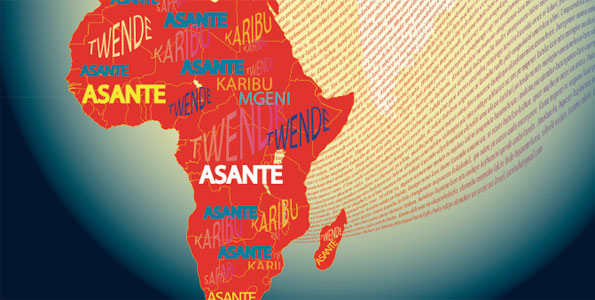
Already an official language of the African Union, Kiswahili has grown fast and now thrives in unexpected places: Libya, the Comoros Islands, Mayotte, Mozambique, Oman, Rwanda, Somalia, United Arab Emirates and even South Africa, Canada and the US. Nation Media Group
SHARE

By Ciugu Mwagiru*

Already an official language of the African Union, Kiswahili has grown fast and now thrives in unexpected places: Libya, the Comoros Islands, Mayotte, Mozambique, Oman, Rwanda, Somalia, United Arab Emirates and even South Africa, Canada and the US. Nation Media Group

For those concerned about the loss of African heritage and our rapidly vanishing languages and cultures, the best news of the decade is that Tanzania plans to promote the teaching of Kiswahili in foreign countries and will be setting up offices for that purpose through its embassies abroad.

Amos Makalla, the country’s deputy Minister for Information, Youth, Culture and Sports, said recently, the project will kick off “very soon” with the opening of a teaching office in Ethiopia’s capital Addis Ababa, which also hosts the headquarters of the African Union.

He made the announcement soon after the Tanzanian parliament ratified a protocol on the establishment of the East African Kiswahili Commission, which seeks to recognise Kiswahili as the regional bloc’s lingua franca.

Tanzania becomes the second country to ratify the protocol after Kenya.

Mr Makalla said the move would help strengthen Kiswahili which is also seen as a unifying factor in the region.

Although the Ugandan parliament is yet to ratify the new protocol, it is one of the three countries that initially worked on its preparation.

As for Rwanda and Burundi, they have already sought the green light from the East African Community Secretariat to embark on the promotion of Kiswahili in their countries.

The two latest members of the EAC will, however, have to wait until all the initial signatories of the protocol ratify it.

Kiswahili has become a second language for millions of people in East and Central Africa, where it is either an official or national language.

Scholars say in Tanzania, it is common for non-speakers to pick up Kiswahili as their first language, mainly in urban areas.

According to statistics contained in an American publication, Ethnologue: Languages of the World, there were 787,630 first-language Kiswahili speakers scattered in different parts of the country.

It is also spoken as a second language by more than 30 million rural people.

In Kenya, the greater part of the country can speak the language. In fact, most educated Kenyans can communicate fluently in Kiswahili, since it is a compulsory subject in both primary and secondary school, and is also widely taught in institutions of higher learning.

As for Uganda, Kiswahili was declared a compulsory subject in primary schools in 1992, although that mandate has not been well implemented.

Also, Kiswahili was declared an official language in 2005, in preparation for the East African Federation but it is yet to pick up in the country.

In the Democratic Republic of Congo, five eastern provinces speak it.

Already an official language of the African Union, alongside English, French, Arabic, Portuguese and Spanish, Kiswahili has grown fast and now thrives in unexpected places: Libya, the Comoros Islands, Mayotte, Mozambique, Oman, Rwanda, Somalia, United Arab Emirates and even South Africa, Canada and the US. This growth is largely the result of historical migratory patterns.

In Mayotte, it is identified as Comorian, while in Somalia, where the Afro-Asiatic Somali language predominates, it has two variants: Kibajuni and Chimwiini.

Kibajuni also serves as the mother tongue of the Bajuni minority ethnic group that inhabits the tiny Bajuni Islands and the southern Kismayu region of Somalia.

On the other hand, the Chimwiini variant, also known as Chimbalazi, is spoken along the Benadir coast by the Bravanese people.

In Oman, an estimated 22,000 people speak Kiswahili, most of them being descendants of Zanzibari Omanis repatriated after the fall of the Sultanate of Zanzibar.

As for South Africa, it had an estimated 2,000 Kiswahili speakers by 2006, most of them settled in Chatsworth, an urban area near Durban along the Natal coastline.

According to historians, they are descendants of people brought from Zanzibar and northern Mozambique between 1873 and 1878, who retained their Muslim faith while working as gardeners.

Farther afield, Kiswahili — or other closely related languages — is spoken by nearly the entire population of the Comoros and by relatively small numbers of people in northern Zambia, Malawi and Mozambique.

Historically, well into the 20th Century, the language was still understood in the southern ports of the Red Sea and along the coasts of southern Arabia and the Persian Gulf.

Classified by linguists as a Bantu language, Kiswahili has grown so rapidly over time that today, it is prominent on the African linguistic map.

With some of its vocabulary derived from Arabic through more than 12 centuries of contact with Arabic-speaking peoples, it has also incorporated Persian, German, Portuguese, English and French words into its vocabulary through sustained contacts during the past five centuries.

Numerous variants of the language have also evolved in recent decades in different parts of Africa. Among them is Kingwana, a variety spoken in the eastern and southern regions of the DRC.

A variety commonly referred to as “Copperbelt Kiswahili,” is spoken in the south.

In Kenya, Sheng, a street patois that blends Kiswahili, English and a variety of ethnic languages, is widely spoken — mostly by the younger generation — mainly in and around Nairobi.

Having its origins in the Nairobi slums and the poorer parts of the city, Sheng is today considered fashionable and cosmopolitan by a growing segment of the population.

At the global level, Kiswahili has grown fast, and today, estimates show it is spoken by some 120 to 150 million people, a huge jump from the 2007 figures.

In that year, Kiswahili was estimated to have six million native speakers and 40 million second language speakers.

In the same year, it was estimated that there were 10,000 Kiswahili speakers in Mozambique, most of them in the northern regions of the country bordering Tanzania.

As for Burundi, there were 6,360 Kiswahili speakers by 2000, spread around the capital Bujumbura, but also in cities such as Gitega.

In response to the rapid spread of the language over vast territories, top world institutions have adopted Kiswahili as a major communication channel, with leading world broadcasters having programmes in the language.

These include BBC World Service, Voice of America, Radio Deutsche Welle, Voice of Russia, China Radio International, Radio France Internationale and Radio South Africa.

*Source The East African
 

Share This Article
LinkedIn Email Copy Link Print
Previous Article Nairobi-skyline-by-night.-Nairobi-is-the-fourth-most-visited-city-in-Africa-a-new-research-shows-underlining-the-city’s-rating-as-the-economic-hub-of-the-wider-East-and-Central-Africa Nairobi beats Africa capitals in attracting visitors, survey shows
Next Article The New Hollywood? Cape Town takes on Tinseltown
Leave a Comment

Leave a Reply Cancel reply

Your email address will not be published. Required fields are marked *

Your Trusted Source for Accurate and Timely Updates!

Our commitment to accuracy, impartiality, and delivering breaking news as it happens has earned us the trust of a vast audience. Stay ahead with real-time updates on the latest events, trends.
FacebookLike
XFollow
InstagramFollow
LinkedInFollow
Diestmann

You Might Also Like

Central African RepublicFeaturedPerspective
CAR Crisis: Rwanda Deploys Last Batch As UN Seeks ‘More’ Peacekeepers

By
Pan African Visions

African Energy ChamberAlgeriaAngola

Ipieca Becomes Official African Energy Week Partner

By
Pan African Visions
African Energy ChamberAlgeriaAngola

African Energy Chamber (AEC) Celebrates Africa Day by Addressing Energy Poverty to Achieve Food Security, Economic Growth in Africa

By
Pan African Visions

Pep Guardiola: Yaya Toure says Man City boss ‘often has problems with Africans’

By
Pan African Visions
PAN AFRICAN VISIONS
Facebook Twitter Youtube Rss Medium

About US


Pan African Visions: Your instant connection to breaking stories and live updates. Stay informed with our real-time coverage across politics, tech, entertainment, and more. Your reliable source for 24/7 news.

  • 7614 Green Willow Court, Hyattsville, MD 20785 , USA
  • +1 24 0429 2177
  • pav@panafricanvisions.com
Top Categories
  • Politics
  • Business in Africa
  • Blog
  • Health
  • Sports
  • Entertainment
  • Multimedia
  • Contact
Usefull Links
  • PAV – Home
  • Contact Us
  • About Us
  • Complaint
  • Advertise With Us

© 2026 Pan African Visions. 
All Rights Reserved.